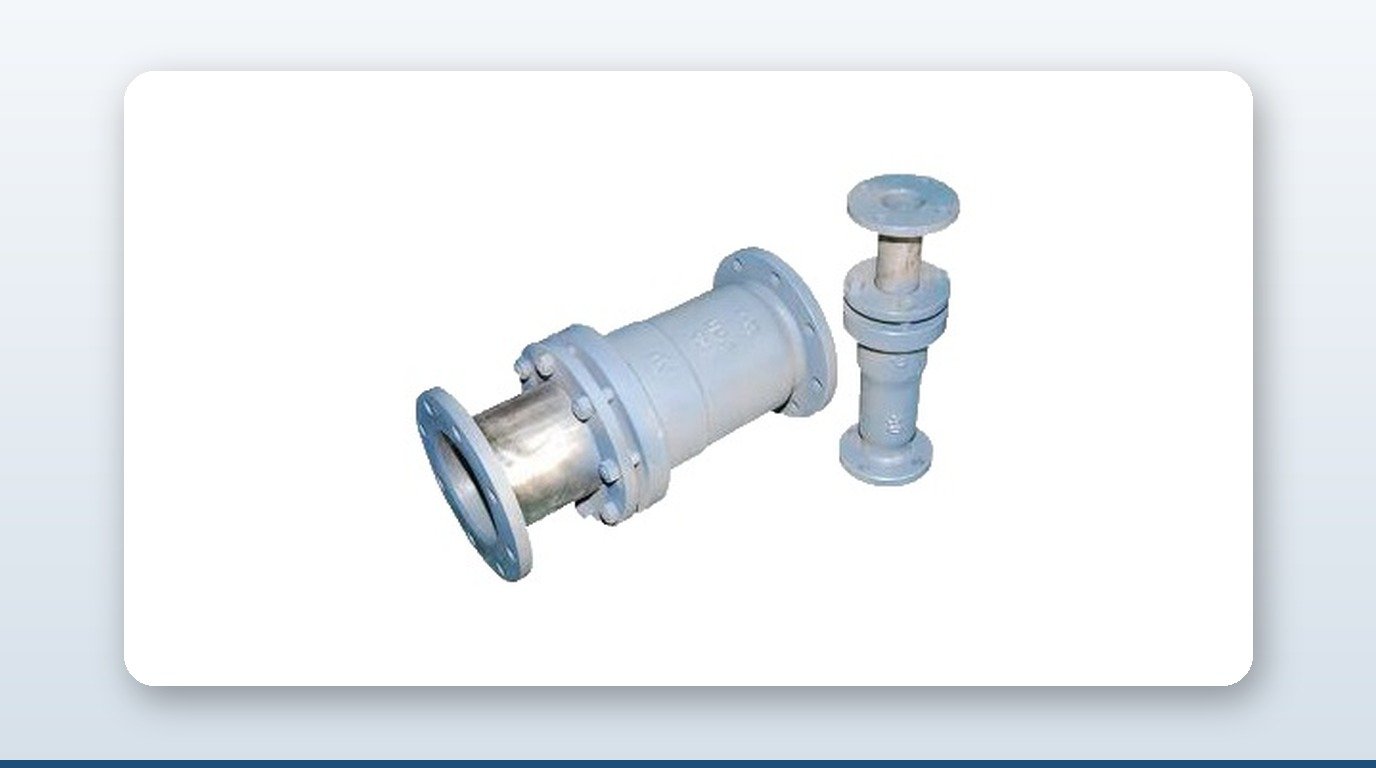
A contractor submitting a coupling data sheet for a PUB water-mains renewal package will often find the submission bounced back with a request for test reports the supplier didn’t think were needed. The coupling may carry WRAS approval from the UK, or NSF/ANSI 61 certification from the US — credentials that satisfy plenty of water utilities elsewhere — and still fail to clear a Singapore project specification. That gap between “internationally certified” and “PUB-compliant” catches out suppliers and specifiers regularly, and understanding it is the single most consequential thing to get right when sourcing pipe couplings for Singapore’s water infrastructure.
PUB does not operate a single, unified coupling standard. Demonstrating compliance for a mechanical coupling destined for a PUB-regulated potable-water network means satisfying several separate, parallel test regimes covering both the coupling’s mechanical performance and the materials in contact with the water — and a different, geometry-specific set of rules applies again if the same physical product is destined for a sewerage or pumping-main application instead. This reference sets out what those requirements actually are, where they come from, and how they differ from the export certifications many overseas coupling manufacturers already hold.
Three Parallel Test Regimes, Not One Standard
A gasketed mechanical coupling for PUB potable-water service is assessed across five separate standards, each covering a different part of the product:
| Component | Standard | What’s tested |
|---|---|---|
| Coupling performance | ASTM F1476:2013 | Pneumatic and vacuum proof, hydrostatic proof and burst, flexibility/rigidity proof, bending moment proof and ultimate |
| Non-metallic parts in water contact | SS 375:2015 / BS 6920:2014 (Clause 8, SS 375 Part 1) | Effects on drinking water quality; finished-form testing at maximum service temperature |
| Metallic parts in water contact | AS/NZS 4020:2018 Appendix H | Extraction of metals; concentrations must fall below AS/NZS limits |
| Elastomeric seals | SS 270:2015 | Material conformity for joints, pipelines, and valve seats |
| Stainless steel body | BS EN 10088-2 | Composition and mechanical properties; minimum grade SUS304 |
A coupling that clears ASTM F1476 for mechanical performance but hasn’t been tested to SS 375 for its gasket material, or AS/NZS 4020 for its metallic wetted parts, has not cleared PUB’s potable-water bar. All five need to be satisfied by the specific product and material combination being supplied — not by the coupling family or brand in general.
One dating detail matters more than it might look: PUB’s requirement anchors on ASTM F1476 test reports dated after 1 December 2020. A test report from before that cutoff, even for what is nominally the identical coupling model, does not satisfy current requirements.
How the Requirement Gets Into a Project — the Contract Framework
Couplings for PUB infrastructure aren’t procured against a single “PUB coupling contract.” The technical requirement is imported into individual project specifications through a stack of documents:
- – Public Sector Standard Conditions of Contract (PSSCOC) — the BCA contract framework PUB projects use
- – PUB G1 Pipework & Fittings — the mechanical general-specification section
- – The Public Utilities (Water Supply) Regulations — the statutory base
- – SS 636:2018, Code of Practice for Water Services — governs the premises side of the network
- – PUB’s Stipulation of Standards & Requirements for Water Fittings (S&R Standard, 15 June 2023) — the potable-water rulebook
- – The Code of Practice on Sewerage and Sanitary Works (COPSSW, 2nd edition 2019 / 3rd edition 2025) — the sewerage rulebook
S&R and COPSSW are separate documents covering the same physical product category — a mechanical coupling — with different requirements depending on whether it sits in a potable-water main or a sewerage/pumping main. Treating them as interchangeable, or assuming one covers the other, is a common and costly mistake in how this space gets discussed.
The Specific S&R Table References
| S&R table | Item |
|---|---|
| 8.3 | Ductile iron flange adaptor (with or without rubber expansion joints) |
| 8.6 | Steel flange adaptor (with or without rubber expansion joints) |
| 8.9 | Gasketed mechanical couplings (added/updated 1 June 2020) |
| 8.10 | Rubber gaskets for elastomeric seals — DI flange and socket-spigot joints |
Table 8.9 is the specific entry governing gasketed mechanical couplings — the product category most relevant to pipe-coupling suppliers — and it was added or updated on 1 June 2020, which lines up with the 1 December 2020 test-report cutoff described above.
Sewerage Couplings Are a Different Product, Not a Cheaper Version
For pumping mains and sewer connections under COPSSW, the geometry and material requirements diverge sharply from the potable-water S&R rules:
- – Pumping mains use ductile iron to EN 598, internally lined with sulphate-resisting or high-alumina cement mortar, and externally coated with metallic zinc plus a bituminous finish.
- – Spigot-and-socket ductile iron pipes are specified to Class K9, to EN 545.
- – Plain-end couplings are specified in rolled mild steel to BS 4360 Grade 43A — a legacy standard callout; the current equivalent under EN 10025-2 is S275JR.
- – Coatings are specified as Rilsan nylon at a minimum of 300 microns — notably heavier than the roughly 250-micron coating common on off-the-shelf European ductile-iron products, which is worth checking explicitly on any directly imported product.
- – Gaskets are specified as NBR or an equivalent material suitable for sewage and industrial water contact.
- – Jacking pipes use double-spigot joints with SUS316 sleeves and pressure transfer rings; jacked ductile iron in reinforced concrete uses break-bolt flexible joints.
A coupling correctly specified for a potable-water main is not automatically correct for a sewerage or pumping-main application, and vice versa — the two rulebooks describe genuinely different products, not two tiers of the same one.
Overseas Approvals Don’t Substitute — a Common Misconception
WRAS (UK) and NSF/ANSI 61 (US) are widely held by international coupling manufacturers, and both are legitimate, respected certifications in their home markets. Neither is accepted by PUB as a substitute for the Singapore-specific stack — SS 375, BS 6920, AS/NZS 4020, and SS 270. Suppliers commonly hold WRAS or NSF for marketing reasons when selling into multiple export markets, but for a Singapore potable-water project they still need to submit accredited, Singapore-relevant test reports covering the standards above. A data sheet listing WRAS or NSF approval, on its own, does not answer a PUB specification requirement.
There is also no central PUB-published list of approved coupling products or brands to check a supplier against. Compliance is demonstrated on a supplier-by-supplier, product-by-product basis through test reports issued by SAC- or ILAC-MRA-accredited laboratories, with surveillance inspections checking supplier records rather than a public register. Industry-driven marks such as the WaterTrust Gold Standard Label reference PUB-type compliance criteria but are not themselves a statutory requirement.
Pressure Ratings Aren’t Fixed by Product Class
PUB doesn’t hard-code a single pressure class for couplings. The design pressure for a given pipeline is set project by project under SS 636 and PUB network practice, and the coupling supplied must be tested to a working pressure at or above that design figure, with proof and burst testing carried out at multiples of the working pressure under ASTM F1476. Couplings across the PN10–PN40 range are sold into the Singapore market; which rating applies is a function of the specific project’s design pressure, decided by the specifier, not a fixed rule tied to pipe size or coupling type.
Repair Clamps and Encapsulation on Live Mains
PUB’s practice for main leaks follows a defined sequence: isolate the section, dewater it, excavate, and either replace the pipe section or fit an external repair clamp. Small holes can sometimes be addressed with a clamp without a full shutdown, but excavation to access the pipe is still generally required. For exposed mains, PUB advisory guidance requires joints to be rigidly restrained — through joint restrainers or an encapsulation clamp — specifically to prevent dislodgement during nearby third-party works. Repair clamps used on potable mains are not treated as a separate, lighter-touch category: they follow the same SS 375 / SS 270 / AS-NZS 4020 material chain as couplings used in new installation, since PUB does not create a separate certification tier for repair products.
Why This Is a Live, Not Theoretical, Compliance Question
This isn’t a compliance question sitting on a shelf. PUB’s water-mains renewal programme runs multi-year contracts through 2029 under its Water Supply (Network) Department, alongside continuing large-diameter sewer, drop-shaft, pumping-main, and process-pipeline work under the second phase of the Deep Tunnel Sewerage System and connecting Tuas Water Reclamation Plant works through 2026 and beyond. None of that changes how couplings destined for PUB-regulated infrastructure — whether potable, sewerage, or repair scope — are typically procured: through the project chain of main contractors, MEICA subcontractors, mains-renewal term contractors, and the consultants who write the specification, rather than sold directly to PUB. A supplier’s practical entry point is having the right documentation ready when that chain asks for it, not a direct PUB sales relationship.
For potable-water scope specifically, the cert stack — ASTM F1476, SS 375, AS/NZS 4020, and SS 270 — is a genuine gate, not a formality. A coupling manufacturer’s general export certifications — ISO 9001, marine class approvals, or water marks issued in other jurisdictions — do not, on their own, confirm current Singapore-specific test documentation for potable-water contact. Project teams and procurement officers evaluating a coupling for PUB potable-water scope should ask their supplier directly which of the five standards above the specific product and material combination has current, dated test reports for, and should treat sewerage/COPSSW scope, repair-clamp scope, and non-potable utility scope as separate questions with their own documentation trail — rather than assuming one certification covers all of them.
Key Takeaways
- – PUB’s potable-water requirement for gasketed mechanical couplings is a five-part test stack — ASTM F1476 (mechanical performance), SS 375/BS 6920 (non-metallic parts), AS/NZS 4020 (metallic parts), SS 270 (elastomeric seals), and BS EN 10088-2 (stainless body) — not a single standard, and test reports must post-date 1 December 2020.
- – The requirement is imported into projects through PSSCOC, PUB G1 Pipework & Fittings, SS 636, and PUB’s S&R Standard, with S&R table 8.9 covering gasketed mechanical couplings specifically — there is no single “PUB coupling contract.”
- – Sewerage and pumping-main couplings follow COPSSW, a materially different geometry and coating specification (BS 4360 Grade 43A / EN 10025-2 mild steel, Rilsan nylon of at least 300 microns, NBR gaskets) from the potable-water S&R rules — the two regimes are not interchangeable.
- – WRAS and NSF/ANSI 61 approvals do not substitute for the Singapore-specific stack, and there is no central PUB-published list of approved products — compliance is demonstrated per product through accredited test reports and checked against supplier records.
- – Repair clamps on potable mains follow the same certification chain as new couplings; buyers should confirm current, dated test and approval documentation with their supplier for the specific standard their project requires, rather than assuming general export certifications carry over.
About David Phee Enterprise
David Phee Enterprise (DPE) is a Singapore-based industrial pipe coupling trading company, established in 1990 and headquartered in Kaki Bukit, and is the exclusive Singapore distributor for JWC (Jeong Woo Coupling). DPE supplies flexible and grip couplings for chilled-water, condenser-water, sewerage, and general utility applications across Singapore, Malaysia, and Indonesia, with same-day delivery from its Singapore HQ. For a specific PUB-regulated scope, buyers should confirm current test and approval documentation for the standard their project requires directly with their supplier — DPE can be reached via davidphee.com or its contact page to discuss product and documentation for a given application.