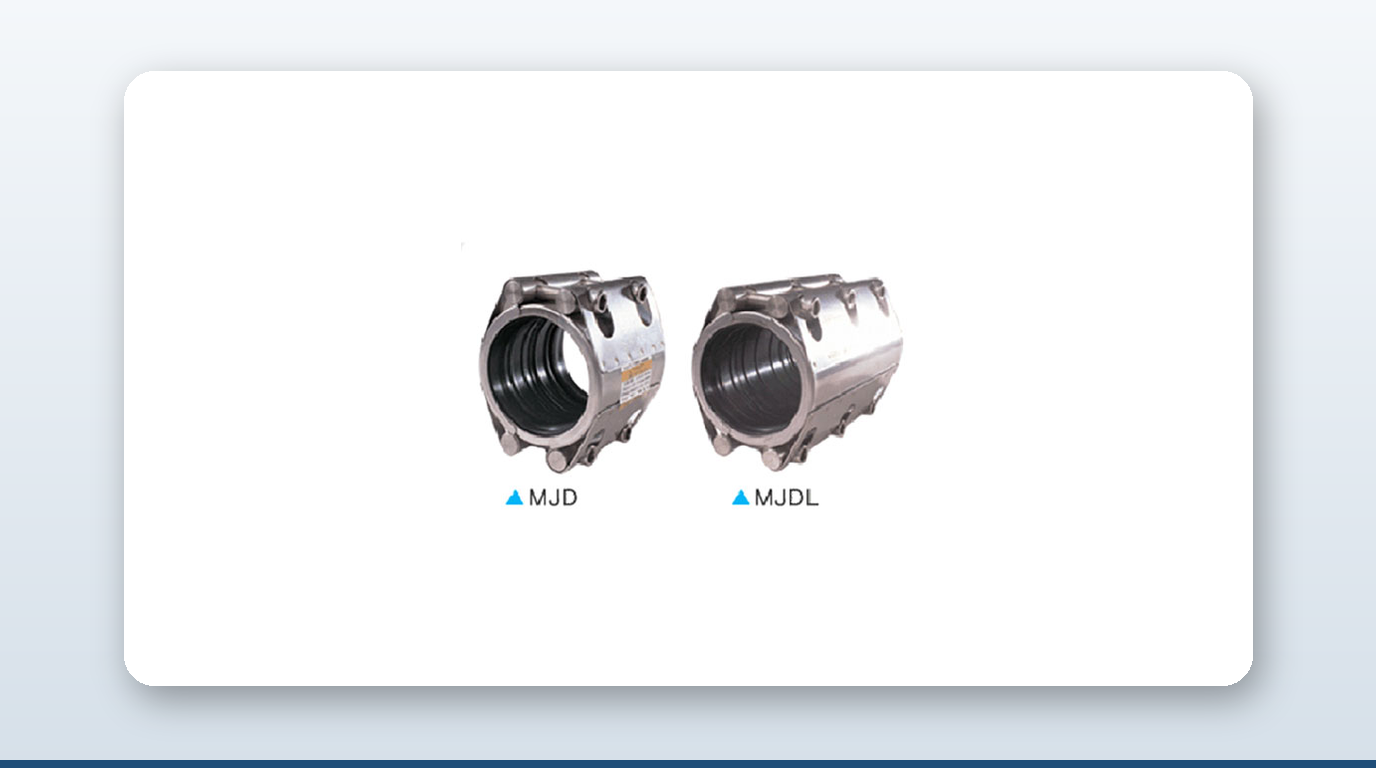
Fire main is the one piping system on a vessel that has to keep working while everything around it is failing. SOLAS Chapter II-2 Regulation 10 sets the design envelope — minimum hydrant pressures, pump capacity, hose length — and IACS UR P2.11 adds a rule that overrides almost every other consideration: any mechanical joint installed inside a machinery space of category A must be a society-approved fire-resistant type. Get that one requirement wrong and a surveyor will refuse the quote on the spot.
The reason is straightforward. A fire main joint sitting above the engine is in the direct flame envelope within minutes of a fuel-oil fire starting below it, and the fire-fighting system depends on that same fire main staying pressurised while the fire burns. If the gasket chars and the joint blows at the five-minute mark, the crew has lost its primary water supply at the exact moment it’s needed most.
The fire-test gate: ISO 19921 and the 800°C rule
Every IACS class society — ABS, DNV, LR, ClassNK, KR, BV, RINA and the rest — accepts a single test method for this: ISO 19921, run on a bench built to ISO 19922. A propane burner delivers roughly 88 kW of heat, calibrated so the gasket face sees 800°C ± 50°C, and the sample has to hold service pressure through a 30-minute burn (or 30 minutes wet, or an 8-minute-dry-plus-22-minute-wet scenario) and then survive a post-fire proof-pressure hold once it cools. Passing the 30-minute dry test qualifies a coupling for every lesser scenario.
This is why slip-on couplings without an intumescent cover are not permitted on the fire main inside machinery space cat A — the plain rubber seal is exposed to direct heat and chars before the test duration is up, and the housing has no mechanical bite to hold the joint together once the seal goes. Grip-type and machine-grooved couplings with a fire-rated intumescent cover are what actually passes: the cover expands under heat into an insulating layer that keeps the gasket below its char point for the test window.
What to specify, and where
| Location | Required architecture | DPE fit |
|---|---|---|
| Fire main inside machinery space cat A | Fire-tested, grip-ring restrained, 316L housing + EPDM gasket + intumescent cover | JWC MJG with Fire Resistant Cover (FRC) |
| Fire main outside cat A | Mechanical coupling with Type Approval; grip-type still preferred for axial restraint | JWC MJG, no FRC needed |
| Sprinkler piping crossing a fire boundary | Fire-tested where the run crosses cat A or an A-class division | JWC MJG + FRC on the boundary-crossing segment only |
| Fire pump discharge — vibration isolation | Cold/standby water only, never the hot post-incident path | A-Ju EJD rubber bellows |
| In-service emergency repair | 316L body, no welding required | Romacon RS-1 (confirm fire-test cert state before quoting into cat A) |
JWC’s Fire Resistant Cover is the wraparound that converts a standard MJG grip-type coupling into a fire-tested-eligible one, rated to the same 800°C ± 50°C / 30-minute IACS gate as the premium-tier Straub Fire-Fence and Victaulic FireLock — at a materially lower price point. It lets a yard stock the base coupling and add the cover only at the specific locations a surveyor flags, rather than upgrading the whole run.
The duty cycle nobody quotes for
Wet fire mains sit pressurised at 3–7 bar continuously for the life of the vessel, because the system can never be allowed to run empty — a firefighter needs water the instant a hydrant valve opens. That standby condition stacks three separate stresses onto the same joint over 25-plus years: gasket compression set under continuous load, thermal cycling between engine-room ambient and deck-exposed pipe runs, and stagnant-water corrosion at the gasket seat, since fire-main water barely moves between drills.
On galvanised steel pipe, the zinc goes first; once it’s gone, the underlying carbon steel pits. 316L housing with an EPDM gasket is the combination that survives this 25-year standby cycle and still has margin left for the fire-endurance test on top of it — which is exactly the architecture the JWC FRC, Straub Fire-Fence, and Victaulic FireLock designs all converge on.
Common failure modes
- Slip-on axial creep under pressure transient — an emergency-pump startup spike can walk an unrestrained slip-on coupling loose. Use grip-type (JWC MJG), not slip-type (JWC MJS), on the fire main proper.
- Bolt creep from vibration and thermal cycling — restrained-grip architecture takes the load off the bolts; periodic re-torque still matters.
- Galvanic loss at a bronze hydrant bolted to a carbon-steel coupling — needs an isolation kit or dielectric sleeve at the junction.
- Gasket char without an intumescent cover — the failure mode the whole fire-test regime exists to prevent.
Key Takeaways
- IACS UR P2.11 bans plain slip-on couplings from the fire main inside machinery space cat A — only fire-tested, grip-restrained types are accepted.
- ISO 19921 is the universal test: 800°C ± 50°C for 30 minutes under service pressure, plus a post-fire proof-pressure hold.
- JWC’s Fire Resistant Cover on the MJG grip-type body clears the same gate as Straub Fire-Fence and Victaulic FireLock, at a lower cost.
- Outside cat A, MJG without the cover is acceptable and saves the certification cost where it isn’t needed.
- Wet fire main is a 25-year continuous-pressure duty cycle before the fire test ever comes into play — 316L housing with EPDM gasket is the combination built to survive it.
About David Phee Enterprise
David Phee Enterprise is the exclusive Singapore distributor for JWC pipe couplings, including the Fire Resistant Cover range for fire-main and fuel-oil applications, stocked at Empire Technocentre, Kaki Bukit for same-day delivery. For fire-main coupling specs or cert documentation, contact DPE or browse the full range at davidphee.com. Related reading: ship chandler pipe fitting supply standards and emergency pipe repair couplings.