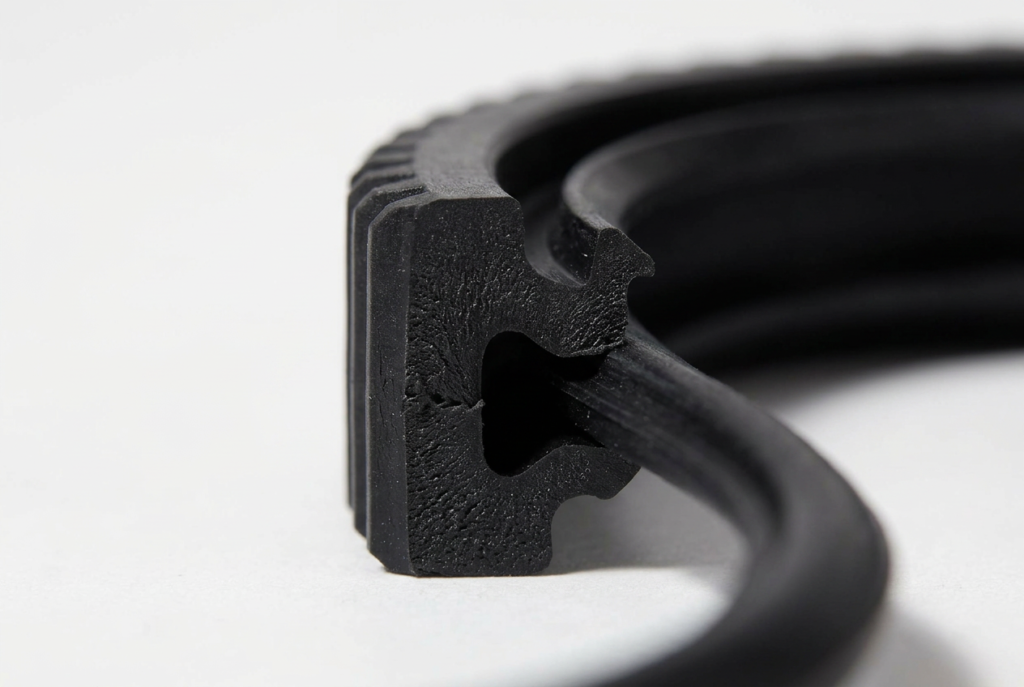
When selecting gasket materials for pipe couplings, NBR, EPDM, and Viton are the three critical elastomer options that dominate Singapore’s industrial, maritime, and HVAC sectors. The gasket is the seal — in a mechanical pipe coupling, whether it’s a grooved coupling, repair clamp, or flexible connector, the housing holds the joint together, but the gasket creates the pressure boundary. Choose the wrong gasket material for the fluid or temperature, and the system leaks, or worse, the gasket fails catastrophically under load.
Each NBR, EPDM, and Viton gasket for pipe couplings suits different operating conditions, and understanding when to specify each material prevents premature gasket failure and system downtime.
NBR, EPDM, and Viton Gasket Material Overview
NBR (Nitrile Butadiene Rubber): General-purpose elastomer. Good oil resistance, moderate chemical resistance, performs well in most utility and industrial water applications. Commonly specified as the default gasket material for pipe couplings in oil, fuel, and hydrocarbon service.
EPDM (Ethylene Propylene Diene Monomer): Excellent resistance to water, steam, and dilute acids/alkalis. Widely used in potable water systems, chilled water, HVAC, and municipal water infrastructure. Poor resistance to oils and petroleum products.
Viton (FKM – Fluoroelastomer): High-performance material with exceptional chemical resistance and high-temperature tolerance. Used in aggressive chemical environments, process piping, and high-temperature applications where NBR or EPDM would degrade. Significantly more expensive than NBR or EPDM.
Performance Comparison
| Parameter | NBR (Nitrile) | EPDM | Viton (FKM) |
|---|---|---|---|
| Temperature range (continuous) | -30°C to +100°C | -40°C to +120°C | -20°C to +200°C |
| Peak temperature (intermittent) | +120°C | +150°C | +230°C |
| Water resistance | Good | Excellent | Excellent |
| Oil & hydrocarbon resistance | Excellent | Poor — not recommended | Excellent |
| Chemical resistance (acids/alkalis) | Moderate | Good (dilute) | Excellent (concentrated) |
| Steam resistance | Poor | Excellent | Excellent |
| Ozone & weathering resistance | Poor | Excellent | Excellent |
| Relative cost | Low (baseline) | Low to moderate (~1.2× NBR) | High (~3–5× NBR) |
| Typical applications | Oil, fuel, diesel, hydraulic systems | Potable water, HVAC, chilled water, steam | Acids, solvents, high-temp process fluids |
When to Specify Each Pipe Coupling Gasket Material
NBR (Nitrile)
Use for:
- Diesel, fuel oil, lubricating oil, hydraulic oil systems
- Shipboard engine room piping (fuel, lube oil)
- Industrial hydraulic systems
- General industrial applications with petroleum products
Do not use for:
- Potable water (taste and odor issues; EPDM preferred)
- High-temperature steam above 100°C
- Outdoor piping exposed to sunlight and ozone (degrades)
- Strong acids or solvents
NBR is the default choice for any system handling petroleum-based fluids. In Singapore’s maritime sector — ship chandlers supplying fuel and lube oil piping systems — NBR gaskets are standard.
EPDM
Use for:
- Potable water (PUB water infrastructure, building services)
- Chilled water systems (HVAC)
- Condenser water and cooling tower loops
- Hot water and low-pressure steam (up to 120°C continuous)
- Municipal water treatment and distribution
Do not use for:
- Petroleum products (oil, diesel, hydraulic fluid) — EPDM swells and fails rapidly
- Concentrated acids or organic solvents
EPDM is the workhorse gasket material for Singapore’s building services and water infrastructure sectors. If the system handles water or dilute chemicals, EPDM is the correct specification unless temperature exceeds its range.
For a detailed explanation of how grooved couplings work in different system types, see rigid vs flexible grooved couplings for HVAC and building services.
Viton (FKM)
Use for:
- High-temperature process piping (above 120°C)
- Concentrated acids, caustics, and solvents
- Chemical processing and petrochemical plants
- High-temperature steam (above EPDM’s limit)
- Applications requiring long-term thermal stability
Do not use for:
- Cost-sensitive utility applications where NBR or EPDM suffice
- Low-pressure water systems (overspecified and expensive)
Viton is the premium choice when nothing else works. Its cost is justified when the fluid or temperature would destroy NBR or EPDM, but specifying Viton where EPDM works is wasting budget.
Temperature Limits in Practice
Singapore’s ambient temperature peaks around 35°C, but system operating temperatures vary widely:
- Chilled water: 6–12°C (EPDM standard)
- Condenser water: Ambient to 38°C (EPDM standard)
- Hot water (domestic): 60–70°C (EPDM sufficient)
- Low-pressure steam: 100–120°C (EPDM upper limit; consider Viton if sustained high temp)
- Process steam/heating: 150°C+ (Viton required)
For shipboard fuel systems, temperatures typically stay below 80°C, well within NBR’s range. Engine room lube oil cooling systems may see intermittent spikes to 100°C; NBR handles this, though Viton provides additional safety margin if thermal cycling is severe.
Chemical Compatibility Notes
Seawater and Brackish Water
All three materials handle seawater, but EPDM is preferred for seawater cooling systems due to superior long-term resistance to salt and biofouling. NBR works but degrades faster in continuous seawater exposure.
Acids and Alkalis
- Dilute acids/alkalis (pH 4–10): EPDM is suitable
- Concentrated acids (pH <3) or strong alkalis (pH >11): Viton required
- Organic acids (acetic, citric): EPDM works; Viton preferred for high concentration
Solvents and Fuels
- Diesel, gasoline, kerosene: NBR or Viton (never EPDM)
- Hydraulic fluids (petroleum-based): NBR
- Hydraulic fluids (synthetic esters): Check compatibility; may require Viton
- Ethanol/methanol blends: EPDM preferred; NBR acceptable at low concentrations
Ozone and UV Degradation
NBR degrades rapidly when exposed to ozone and UV radiation. Outdoor piping installations — cooling tower connections, rooftop HVAC — should not use NBR gaskets. EPDM and Viton both resist ozone and weathering, making them suitable for external piping.
In Singapore’s high-humidity, high-UV environment, outdoor pipe coupling gaskets must be EPDM or Viton. NBR gaskets on outdoor cooling water lines will crack and fail within months.
Gasket Marking and Identification
Most coupling gaskets are color-coded or embossed:
- NBR: Typically black (but black is not exclusive to NBR)
- EPDM: Black or dark grey; sometimes marked with “EPDM” or “EP” on the gasket body
- Viton: Brown, tan, or black; often marked “FKM” or “Viton”
Always verify the material specification on the manufacturer’s datasheet or product label. Color alone is not a reliable identifier — some EPDM gaskets are black and look identical to NBR. When in doubt, request material certification from the supplier.
Cost and Availability in Singapore
Standard NBR and EPDM gaskets are stocked locally and available same-day from industrial suppliers like David Phee Enterprise. Viton gaskets are less commonly stocked and may require lead time for specific sizes.
For high-volume projects, confirm gasket material availability early. Substituting EPDM for NBR (or vice versa) due to stock shortages creates system-wide compatibility issues that are expensive to fix post-installation.
Key Takeaways
- NBR gaskets are for oil, fuel, and hydrocarbon systems; EPDM is for water and steam applications; Viton handles high temperatures and aggressive chemicals
- EPDM is the standard choice for Singapore’s water infrastructure and HVAC systems
- Never use EPDM in petroleum service — it swells and fails rapidly
- NBR degrades under UV and ozone exposure; use EPDM or Viton for outdoor installations
- Viton costs 3–5× more than NBR/EPDM — only specify where operating conditions justify it
- Always verify gasket material on the manufacturer’s datasheet; color coding is not a reliable identifier
David Phee Enterprise stocks NBR, EPDM, and Viton gaskets for JWC, Aju, and Romacon pipe couplings in Singapore, with same-day delivery from Kaki Bukit. For material specification assistance and quotations, visit davidphee.com.
2 thoughts on “NBR vs EPDM vs Viton Gaskets for Pipe Couplings”