Ship chandlers in Singapore spend a surprising amount of their day thinking about geography.
Not the maritime kind. The road kind — whether the supplier holding the part you need is thirty minutes from the vessel or ninety, whether their loading bay is accessible at 6pm, and whether “we have it in stock” means it is on a shelf here or in a warehouse across the causeway.
Kaki Bukit comes up constantly in that calculation, because a large number of Singapore’s technical and engineering suppliers are based there. This guide explains why, what the location actually means for delivery times to the yards and anchorages, and how to think about supplier location when the clock is running.
What and Where Kaki Bukit Is
Kaki Bukit is an industrial estate in eastern Singapore, sitting between Bedok, Ubi and Eunos. It is light-to-general industrial in character rather than heavy — the built form is predominantly multi-storey industrial buildings and technocentres rather than open yards and large sheds.
That building type is the key to understanding the area. A technocentre unit gives a business a modest floor plate, a roller shutter, access to a shared loading bay and a workshop-plus-office footprint in a single lease. For a trading and distribution business holding technical stock, that is close to ideal: enough room for racking and a picking area, an office attached, and none of the cost of land you do not need.
The result is a dense concentration of engineering suppliers, equipment distributors, fabricators and technical trading firms in a comparatively small area.
David Phee Enterprise is based at Empire Technocentre in Kaki Bukit, which is the vantage point this guide is written from.
Why Road Access Matters More Than Postcode
Kaki Bukit’s practical advantage is not the estate itself. It is the expressway access around it.
The area sits within easy reach of the PIE (Pan Island Expressway), the KPE (Kallang–Paya Lebar Expressway) and the TPE (Tampines Expressway). For a supplier making multiple deliveries a day across the island, that matters more than being marginally closer to any single destination — because the constraint on urgent delivery is rarely raw distance. It is how many junctions and how much surface-road congestion sit between the loading bay and the expressway on-ramp.
An estate with fast expressway access and a five-minute run to the on-ramp will consistently beat a nominally closer location that requires twenty minutes of arterial road first.
The East–West Reality for Marine Work
Here is the part that matters most for chandlers, and it is worth being straightforward about the trade-off rather than pretending it does not exist.
Singapore’s marine activity is split geographically:
| Destination | Where | Character |
|---|---|---|
| Tuas, Jurong, Benoi, Pioneer | Far west | The major shipyards and offshore fabrication yards |
| Loyang Offshore Supply Base | East, near Changi | Offshore support vessels, supply base logistics |
| Eastern Anchorages | Off the east coast | Vessels at anchor, launch-served from the east |
| Pasir Panjang / city terminals | South | Container and general terminals |
A Kaki Bukit supplier is well placed for the east — Loyang, Changi, the eastern anchorage boat services — and is making a genuine cross-island run to reach Tuas and the western yards.
Any supplier who tells you their location is optimal for everywhere is selling you something. The honest position is that an eastern base is strong to the east, workable to the west with an early enough call, and that the deciding factor for a western delivery is almost always what time the order is confirmed, not the mileage. An order confirmed at 10am reaches Tuas comfortably within the working day. The same order confirmed at 5pm is a different conversation.
For a chandler, the useful conclusion is not “use eastern suppliers” or “use western suppliers.” It is: know where your supplier sits, and front-load the western jobs.
What Chandlers Typically Source From the Kaki Bukit Cluster
The estate skews toward technical stores and engineering consumables rather than provisions or deck stores. In practice that means categories like:
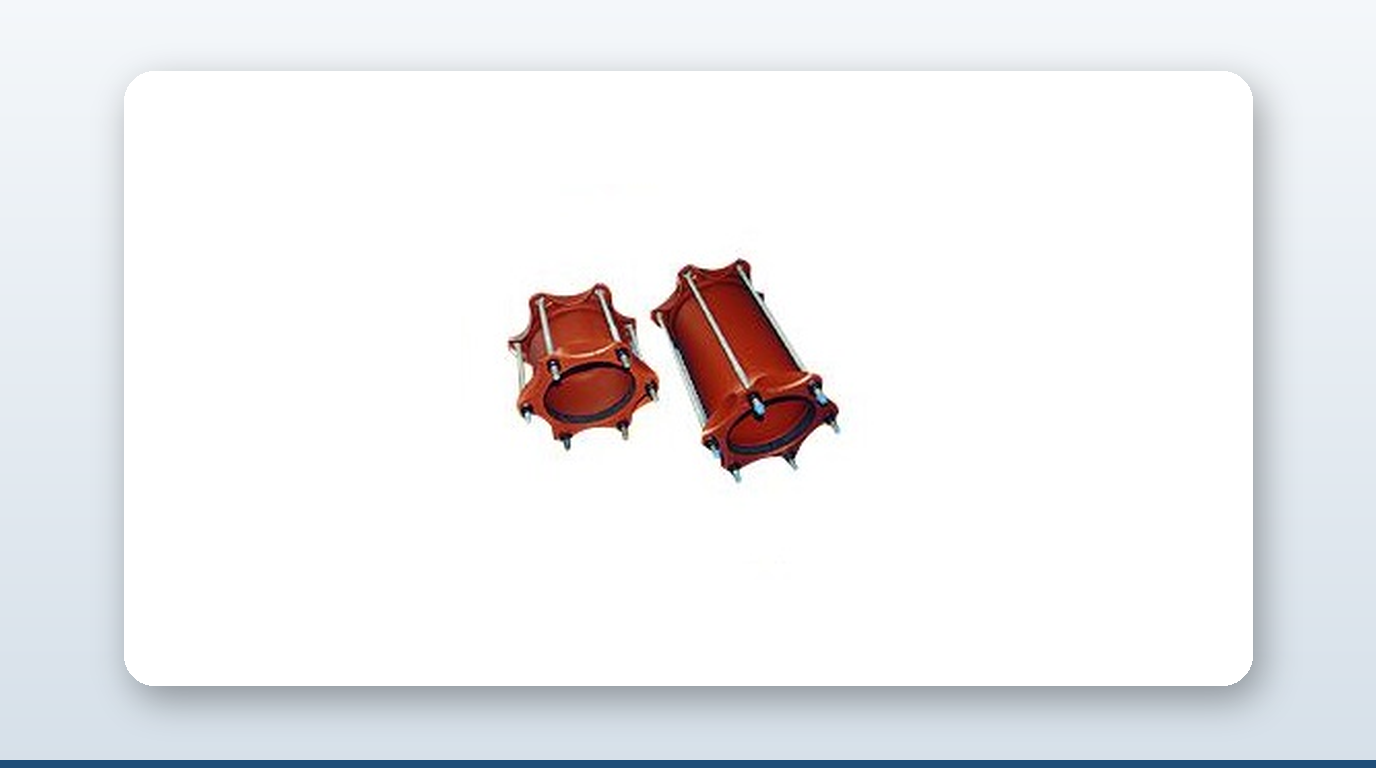
- – Pipe joints and fittings — mechanical couplings, repair clamps, expansion joints, flange adaptors, gaskets
- – Valves and instrumentation
- – Fasteners and stainless hardware
- – Hoses, seals and elastomer products
- – Small fabrication and machining
- – Electrical and control components
This is the “technical purchasing” half of a chandler’s job — the requisitions that arrive with a drawing or a photograph rather than a catalogue code, and that need someone at the other end who can read a specification.
Provisions, bonded stores and deck stores generally run through different supply chains and different parts of the island.
Evaluating a Supplier When the Clock Is Running
Location is one input. On an urgent job it is not the most important one. Ranked by how often they actually determine whether you get the part today:
1. Is it genuinely in stock, here? This dominates everything. A supplier fifteen minutes away who has to order the part in is slower than a supplier an hour away with it on the shelf. Ask specifically whether the stock is held in Singapore, and be wary of a stock figure that turns out to describe a regional warehouse.
2. Can they answer a technical question without going away? On pipe joints this usually means: can they work from a measured outside diameter and a pipe material, and tell you immediately whether a stocked item covers it? A supplier who needs to email a principal overseas to answer a dimensional question has just added a day.
3. Do they say no quickly? Underrated, and the thing that most distinguishes a supplier worth keeping. A fast, honest “we don’t have that” lets you make your next call while there is still time to make it. A slow maybe costs you the afternoon.
4. Can they produce the certification with the goods? For classed vessels this is not optional. Type approval on a mechanical coupling attaches to the coupling and gasket as a combination — the approved housing with a substituted gasket is not an approved joint. If a certificate is needed with the delivery, confirm at order stage that it can be issued, not on arrival.
5. Then location. Which mostly resolves to: how late in the day can you place the order and still get it today.
A Note on Regional Orders
One thing that is easy to miss when comparing Singapore suppliers: whether a supplier serving Malaysia and Indonesia does so from Singapore stock or from separate regional inventories.
David Phee Enterprise runs hub-and-spoke from Singapore — regional orders into Malaysia and Indonesia are fulfilled from the same Kaki Bukit stock rather than from branch warehouses. For a chandler this matters in a specific way: the stock position quoted is the stock position in the building, so a Singapore-urgent order is never competing with a transfer that has to happen first.
Working With Us in Kaki Bukit
David Phee Enterprise has supplied industrial pipe couplings, repair clamps and expansion joints from Kaki Bukit for three decades, serving ship chandlers, shipyards, and water and process infrastructure across Singapore, Malaysia and Indonesia. We hold common marine sizes in stock and deliver same-day within Singapore where the part is on the shelf.
If you handle technical purchasing for a chandler and want to know whether a given pipe-joint requirement is stocked, the fastest brief is a photograph of the pipe end, the measured outside diameter in millimetres, the pipe material, and the service. We will tell you what we have — and tell you straight when we do not.
For enquiries and quotations, visit www.davidphee.com.
*Delivery timings referenced in this guide are general guidance for planning purposes and vary with traffic, order cut-off times and stock availability. Confirm timing at order stage for time-critical requirements.*