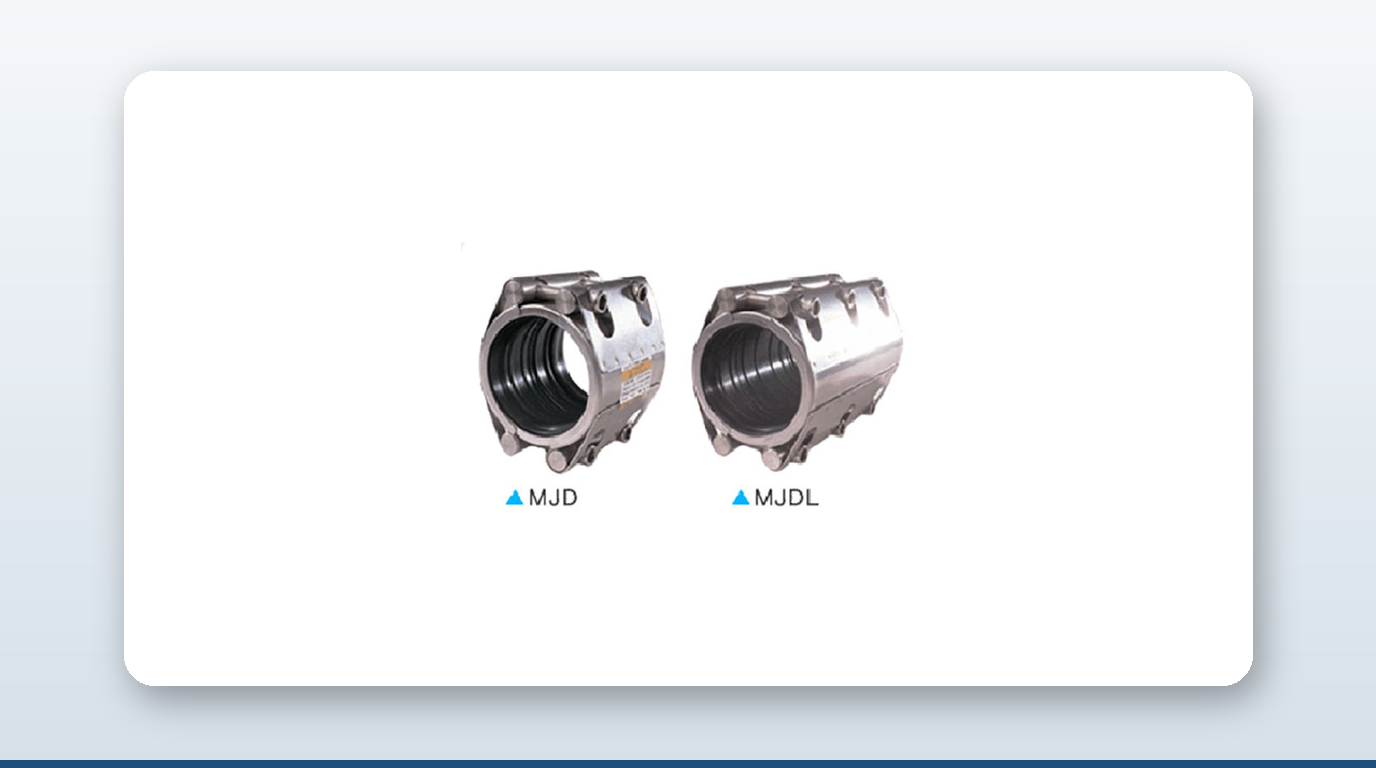
A ship chandler’s problem is not usually finding a pipe coupling. It is finding the right one before the vessel sails.
That constraint changes everything about how the order has to be handled. A vessel alongside at Jurong or in the Eastern Anchorage has a departure time. A shipyard has a docking window. Neither moves because a supplier needs two days to confirm a dimension. When the call comes in at 4pm and the vessel sails at 11pm, the supplier is either useful in the next few hours or entirely irrelevant.
This article walks through what actually happens on a same-day order — the sequence, the decisions, and the four things that decide whether same-day is possible at all. It is written for chandlers, ship managers and yard buyers who want to know what they are relying on when they call.
The Situation, Typically
The pattern repeats often enough to describe generically.
A vessel reports a leaking joint on a seawater cooling line, a fire main, or a ballast line. Sometimes it is a failed gasket on an existing mechanical coupling. Sometimes it is corrosion damage to the pipe itself, and the joint is being used as a repair rather than a connection. The chief engineer photographs the pipe, measures what can be reached, and sends it to the chandler. The chandler forwards it to suppliers.
What arrives at our end is often a WhatsApp photograph, a nominal size, and a departure time. Occasionally a full specification. Frequently not.
The job from there is to convert an incomplete description into a correct part, in stock, on a van, in a few hours.
The Sequence
1. Identify the actual dimension, not the label
This is the step that decides everything downstream, and it is where most of the delay in the industry comes from.
A mechanical coupling grips the pipe’s outside diameter. The nominal size — DN100, 4-inch, 100A — is a label, and different pipe materials carry different outside diameters under the same label. Ductile iron, carbon steel, stainless steel, copper-nickel and polyethylene all run their own OD series.
So the first response is rarely a price. It is a question: what is the measured OD in millimetres, and what is the pipe material? A photograph with a tape measure or a calliper across the pipe end answers it in thirty seconds and removes the single biggest cause of a wrong part arriving on a jetty.
If the OD cannot be measured — the pipe is lagged, or in a space nobody can reach with the vessel working — the fallback is to identify the pipe material and standard, then work back to OD from the published series. Slower and less certain, but workable.
2. Establish the service, because it sets the gasket
The housing gets the attention. The gasket decides whether it leaks.
The questions are short and they matter:
- – What is in the line? Seawater, fresh water, fuel oil, lube oil, hydraulic, steam.
- – What temperature, continuous?
- – Is this a classed line?
Service dictates the elastomer, and the wrong elastomer fails fast. EPDM is the marine default for water, seawater, fresh-water cooling and fire main — and it is destroyed by petroleum oils. Nitrile is the default for fuel, lube and hydraulic — and it is destroyed by ozone and by the oxidants in treated ballast water. Getting this backwards produces a joint that holds beautifully on the pressure test and fails weeks later at sea.
On a classed vessel there is a further constraint, and it is absolute: classification-society type approval attaches to the coupling and gasket as a combination. The approved housing with a different gasket compound is not an approved joint. This is why a same-day order for a classed line is filled from certified stock with the OEM gasket, not by pairing whatever housing is on the shelf with a gasket cut to size.
3. Check stock honestly, and say so immediately
At this point the answer is either yes or no, and the useful thing is to say which one within minutes.
In stock means it ships today. Our Kaki Bukit HQ carries the common marine sizes and material combinations precisely so this answer can be yes most of the time.
Not in stock means the chandler needs to know *now*, not after a day of hopeful checking, because they have other calls to make and a vessel that is still sailing. A fast, honest no is worth considerably more to a chandler than a slow maybe. It is also, bluntly, what earns the next call.
Where a part is not stocked, the useful follow-up is whether a technically equivalent stocked item will do the job — a different brand at the same OD range, pressure rating and gasket compound, or a wide-tolerance coupling whose compression range spans the measured OD. That decision needs the numbers from step one, which is why step one comes first.
4. Quote with the specification written down
The quotation states OD range, pressure rating, housing material, gasket compound and any certification, in writing. Not because of formality, but because it is the record that the right thing was ordered. When the chief engineer opens the box at 9pm, the part either matches the description or it does not, and there is no time for a discussion about what was meant.
5. Deliver
Same-day delivery to the yards, to the wharf, or to the chandler’s own store for onward dispatch. Kaki Bukit to the western yards is a manageable run inside a working afternoon, which is the whole reason the hub sits where it does.
The Four Things That Decide Whether Same-Day Is Possible
Same-day is not a promise that can be made unconditionally, and any supplier who makes it unconditionally is not being straight with you. In practice it comes down to four factors:
1. Whether the OD is known. This is the fastest thing to fix and the most common blocker. A measurement in the first message saves hours.
2. Whether it is a stocked line. Stocked common marine sizes ship today. Project-specific builds — a large-bore copper-nickel fire-main coupling, an unusual expansion joint stroke — do not, and cannot be made to.
3. Whether the service is certified. A classed line needs the certified housing-and-gasket combination. If that exact combination is not on the shelf, no amount of urgency creates it.
4. What time the call comes. A 10am call and a 6pm call are different problems. Earlier is materially better, and it is worth calling on a *suspected* failure rather than waiting for a confirmed one.
What Chandlers Can Do to Make It Faster
Three things, in order of impact:
- – Send the measured OD in millimetres and the pipe material in the first message. This alone converts most same-day requests from uncertain to straightforward.
- – State the service and the temperature. It sets the gasket, and the gasket is what fails.
- – Say whether the vessel is classed and to which society — and if a certificate will be required with the goods, say so up front rather than after delivery.
A photograph showing the pipe end with a tape across it, plus one line of text — *”seawater cooling, 45°C, ABS class, sails 2300″* — is enough to work from. That is a complete brief.
Why the Hub Model Matters Here
David Phee Enterprise runs hub-and-spoke from Singapore. Regional orders into Malaysia and Indonesia are fulfilled from the same Kaki Bukit stock rather than through separate branch inventories. For a ship chandler that has one practical consequence: the stock position you are quoted against is the actual stock position, not a figure from another country’s warehouse that has to be transferred before it can be delivered.
Thirty years of trading in this product category is mostly what determines whether step one and step two go quickly — recognising a coupling from a photograph, knowing which OD series a given pipe standard follows, and knowing which gasket a given service actually needs.
Working With Us
If you are a chandler, ship manager or yard buyer handling urgent pipe-joint requirements in Singapore, the fastest route is a photograph, the measured OD, the pipe material, the service and the sailing time. We will confirm stock and specification, quote in writing, and deliver same-day where the part is stocked — and tell you straight away when it is not.
For enquiries and quotations, visit www.davidphee.com.
*The sequence described here is our standard handling process for urgent requirements. Same-day delivery is subject to stock availability, the completeness of the technical information supplied, and order cut-off times. Certified marine applications require the approved coupling and gasket combination and cannot be substituted.*