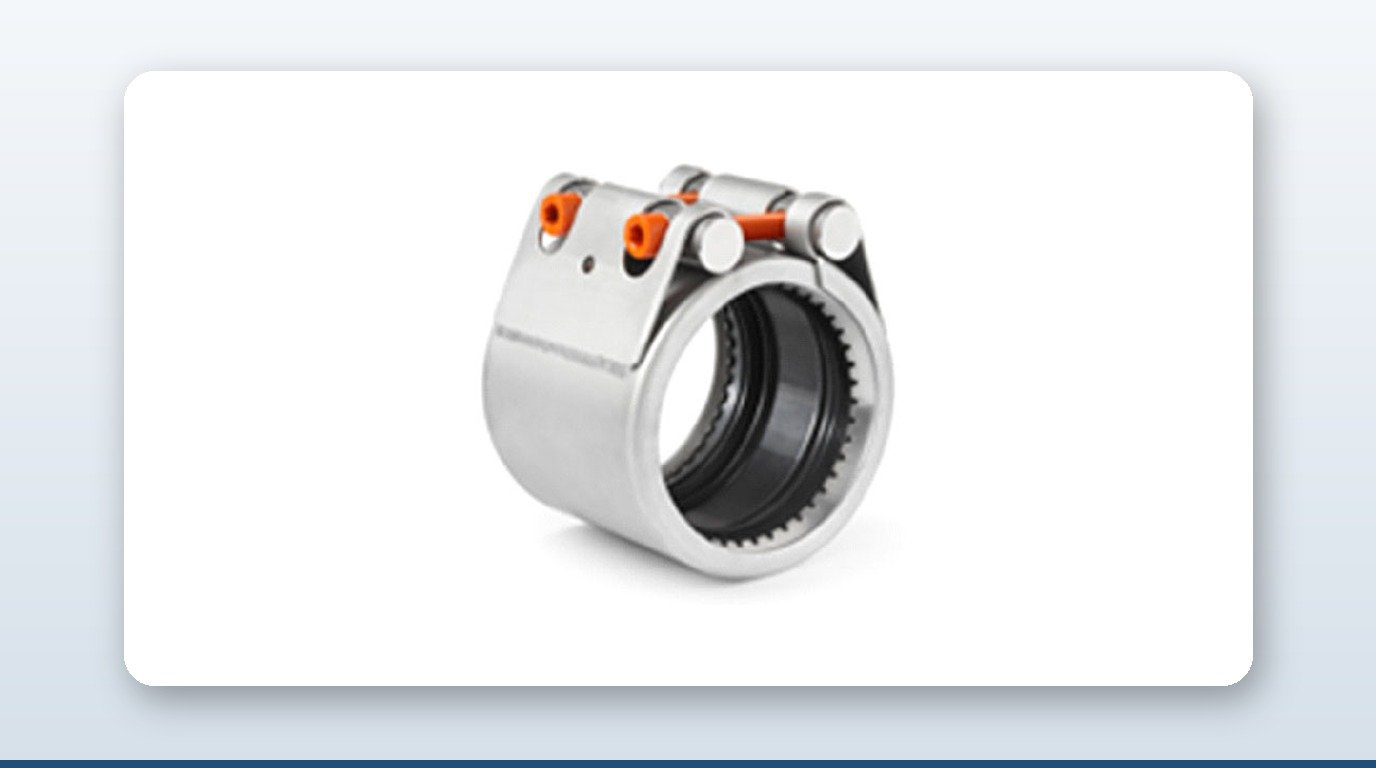
Ask a piping engineer at an air-separation plant whether a mechanical coupling can go on their oxygen line, and the answer is a flat no, delivered without much need for further explanation. Industrial gas is one of the least forgiving sectors for mechanical pipe joints anywhere in process industry — cryogenic temperatures, oxygen-cleanliness regimes, and hydrogen embrittlement all rule out elastomeric-gasketed couplings on the gas-wetted lines that define the business. That’s not a marketing framing problem to work around; it’s the correct engineering answer, and any supplier claiming otherwise on process-side gas piping shouldn’t be trusted on anything else either.
What that leaves is a narrower but genuine opening: the facility utility side of an air-separation unit (ASU) and gas-processing plant. Singapore hosts a meaningful cluster of industrial gas operators — Linde, Air Liquide, Air Products, and Nippon Sanso among them — running large compressor-driven ASUs on Jurong Island and supplying specialty gas to the island’s semiconductor fab parks. Every one of those plants runs a cooling-water circuit that looks, from a piping perspective, exactly like the utility loop at a power plant or refinery. This guide covers where mechanical couplings genuinely fit in industrial gas piping, and where they categorically don’t.
The Wall: Where Mechanical Couplings Cannot Go
It’s worth being direct about the scope of the no-play list, because it covers most of an industrial gas plant’s piping by length and value.
| System | Why mechanical couplings are excluded |
|---|---|
| Cryogenic LIN / LOX / LAR storage and distribution | Vacuum-jacketed double-wall pipe, butt-welded; elastomeric gaskets embrittle at -196°C |
| Cryogenic liquid hydrogen (LH2) lines | Same cryogenic constraint, plus hydrogen embrittlement of elastomeric seals |
| Gaseous oxygen process and distribution lines | ASTM G93 / ISO 2503 oxygen-cleanliness regime excludes standard coupling elastomers; near-universally welded 316 stainless |
| Gaseous hydrogen pipelines | Hydrogen embrittles most elastomers and diffuses through most sealant materials; welded only |
| High-purity gaseous N2 / Ar (electronics grade) | Orbital-welded electropolished tubing; any mechanical joint is a contamination risk |
| ASU cold-box process piping | Brazed aluminium heat-exchanger connections and welded stainless steel — no coupling access point exists |
This isn’t a gap DPE or any other supplier can engineer around with a better gasket compound. Cryogenic and oxygen service piping is welded because the failure modes of a mechanical joint at those temperatures and cleanliness levels are genuinely unacceptable, and every credible operator engineers to that standard without exception.
The Real Opening: The ASU Cooling-Water Circuit
Where industrial gas plants do offer a legitimate mechanical-coupling opportunity is in the balance-of-plant cooling-water system. A large-scale air-separation unit runs multi-stage centrifugal compressors — a main air compressor and typically a booster air compressor — with water-cooled intercoolers that reject substantial heat loads to a dedicated cooling-water loop. That loop runs at ambient supply temperatures, typically in the 25–35°C range, at low-to-medium pressure around 3–6 bar, moving treated water through carbon steel or GRP pipe commonly in the DN100–DN500 range. Functionally, this is indistinguishable from the cooling-water circuit at a power plant or refinery, and the same mechanical-coupling logic applies: ambient temperature, moderate pressure, non-hazardous fluid, and no process-purity requirement.
For an operator running several ASU trains, this cooling-water loop is the single largest addressable mechanical-coupling scope on site. It’s a genuinely useful engineering fact worth internalising: even a single large ASU (in the 1,000+ tonne-per-day range) can carry cooling-water flow rates of several thousand cubic metres per hour, which translates into meaningful pipe-diameter runs across the intercooler loop, cooling-tower supply and return, and makeup-water lines.
Other Utility Applications Worth Knowing
Beyond the ASU cooling-water circuit itself, a handful of adjacent systems round out the addressable scope at any industrial gas facility:
- – Cooling-tower return mains and basin headers — same water chemistry as the ASU intercooler loop, with flexible couplings also absorbing vibration from the cooling-tower fan drive.
- – Plant-service, raw-water, and makeup-water headers — low-pressure utility piping, functionally identical to the equivalent system at a power plant.
- – Fire-protection ring main — grooved couplings are standard practice here, but UL or FM listing is a mandatory requirement, not an optional extra, at industrial gas sites on Jurong Island as much as anywhere else.
- – Compressed air and instrument air laterals — low-pressure plant utility air, distinct from any process-gas line.
- – Emergency in-service leak repair — repair clamps on any utility header, without touching the ASU process side.
Industrial gas facilities run continuously, with very little tolerance for unplanned shutdown — a cooling-water leak that forces a compressor trip means lost production, not just an inconvenient repair. That operating reality makes repair-clamp availability a genuinely practical stocking decision for plant maintenance teams, independent of any larger coupling project.
Investment Windows Worth Tracking
Singapore’s industrial gas sector has been in active expansion mode, driven substantially by semiconductor fab demand for ultra-high-purity nitrogen and other electronics-grade gases. A major gasification and air-separation complex expansion on Jurong Island reached mechanical completion in 2024, adding a large new air-separation train — new-build cooling-water piping on a project of that scale represents a significant utility-side installation event, even though the headline investment is entirely about process-gas capacity. Beyond that, new on-site air-separation plants are under construction or planned to supply Singapore’s growing semiconductor fab base, with completion dates running into 2026 and 2027. Each of these new plants means a fresh cooling-water circuit, cooling-tower header, and fire-main extension being designed and procured from scratch — exactly the kind of new-build utility scope where mechanical coupling specification gets locked in early, well before construction is visibly underway.
Standards and the Cleanliness Gate
The dominant standard governing what mechanical couplings can and cannot touch in this sector is ASTM G93 (alongside the related ISO 2503), which sets the oxygen-cleanliness regime for any oxygen-service piping — this is the standard that rules out standard elastomeric gasket materials outright, regardless of pressure or temperature. For the general process piping that does get welded or flanged rather than run through the cold box, ASME B31.3 remains the baseline code, consistent with the rest of Singapore’s process industries. On the utility side covered above, no gas-specific cleanliness regime applies — cooling water, fire mains, and plant air are specified the same way they would be at a refinery or power plant.
Procurement for utility-side scope tends to follow one of two paths: qualification through the EPC or on-site plant contractor during new-build construction, or supplier registration with the maintenance and turnaround contractor cluster that services multiple Jurong Island industrial sites for brownfield work. As in other Jurong Island sectors, a relatively small group of Singapore-based mechanical maintenance contractors handles a large share of this utility and repair scope across several operators, which makes contractor-level qualification a practical way to reach more than one plant through a single relationship.
Key Takeaways
- – Cryogenic (LIN/LOX/LAR/LH2), oxygen-service, hydrogen, and high-purity electronics-grade gas piping are all welded-only in industrial gas plants — there is no legitimate mechanical-coupling opening on any gas-wetted process line.
- – The ASU cooling-water circuit — serving the main and booster air compressor intercoolers — is the single largest genuine mechanical-coupling opportunity in the sector, running at ambient temperature and moderate pressure through carbon steel or GRP pipe.
- – Cooling-tower returns, plant-service water, fire mains (UL/FM-listed), instrument air, and emergency repair clamps round out the addressable utility scope.
- – New air-separation plant is actively being built in Singapore to serve semiconductor fab demand, with completions running into 2026–2027 — each new plant means a full new utility-piping scope being specified from scratch.
- – ASTM G93 governs the oxygen-cleanliness exclusion; ASME B31.3 remains the baseline standard for general process piping; utility-side scope follows the same specification logic as power and petrochemical sites.
About David Phee Enterprise
David Phee Enterprise has supplied mechanical pipe couplings and repair clamps to Singapore’s industrial sector from its Kaki Bukit headquarters since 1990, and is the exclusive Singapore distributor for Jeong Woo Coupling (JWC). For operators and maintenance contractors working the utility side of an air-separation or gas-processing plant, same-day delivery from the Singapore HQ keeps a compressor cooling-water leak from becoming a production stoppage. For product specifications or an application review, DPE can be reached through davidphee.com or the contact page.