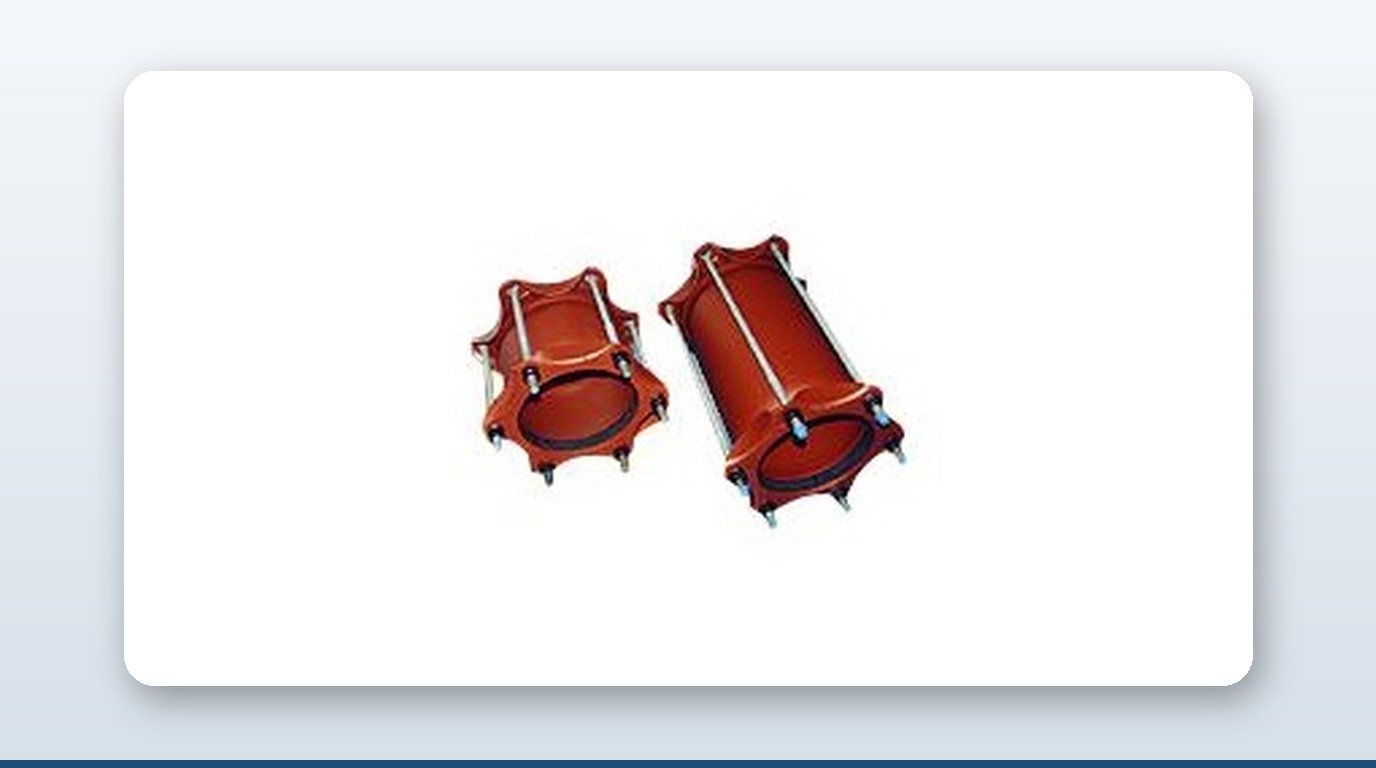
When a cooling-water line starts weeping on Jurong Island, or a firewater main needs extending ahead of a shutdown, the piping engineer’s first question is rarely which coupling brand to specify. It’s whether the job can be done at all without opening a hot-work permit. Jurong Island runs some of the tightest hazardous-area piping regimes in Singapore, and the overwhelming majority of process lines across its refineries, petrochemical complexes, and LNG terminal are welded-only — by policy, not by preference. That leaves a narrower, but very real, band of piping where mechanical couplings are not just acceptable but the practical, spec-compliant choice.
For maintenance planners and procurement officers working across the island’s operators, knowing exactly where that line sits — and which standards govern it — saves a lot of wasted effort on both sides of a quotation. This guide sets out what mechanical pipe couplings can and cannot be specified for on Jurong Island, the standards operators call up, and the maintenance cadence that drives demand for utility-side piping work.
One Island, One Piping Convention
Jurong Island hosts a dense cluster of large-scale operators: integrated crude refineries, an ethylene cracker complex, aromatics and specialty chemical plants, synthetic rubber and polyolefin producers, and Singapore’s LNG import terminal. Ownership at several of these sites has changed hands more than once in recent years, and plant footprints continue to expand — new condensate splitters, cracker tie-ins, and terminal jetty works are all active or recently completed across the island. What hasn’t changed is the underlying piping philosophy.
Across every operator type on the island, hydrocarbon, sour-service, aromatic, and high-pressure process piping is butt-welded, full stop. This is typically engineered to ASME B31.3 Category M or Normal fluid service, and it applies regardless of which company’s name is on the gate. Cryogenic and chlorinated service — LNG lines, halobutyl rubber process lines — follow the same rule for an additional reason: elastomeric gaskets in a mechanical coupling do not tolerate cryogenic temperatures or aggressive chemistry, so the joint has to be metal-to-metal and continuous. No amount of certification changes that physics.
Where Mechanical Couplings Are Actually Specified
The addressable scope for mechanical couplings on Jurong Island sits entirely on the utility side of the fence — the systems that keep a plant running rather than the systems that process hydrocarbons. In practice, this means:
| Application | Why mechanical couplings are accepted |
|---|---|
| Firewater ring main | Grooved couplings are standard fire-protection practice, provided they carry UL or FM listing |
| Seawater cooling intake / discharge | Ambient-temperature, low-to-medium pressure — no process-fluid restriction |
| Cooling-tower return mains | Same water chemistry as cooling intake; flexible joints also absorb vibration |
| Instrument air / plant air laterals | Low-pressure utility air, non-process-critical |
| Plant drains, sewer, and slop lines | Lowest-spec piping on site; highest volume of coupling use |
| Tank-farm bund and utility tie-ins | Temporary and semi-permanent utility connections |
| Emergency in-service leak repair | Repair clamps bridge a leak without a shutdown, pending a permanent fix |
This is a consistent pattern industry-wide, not a Jurong Island quirk: firewater, seawater cooling, plant air, and drains are the same utility envelope that shows up at refineries and petrochemical sites globally. What makes it worth stating plainly for Singapore buyers is that grooved and grip-style mechanical couplings are explicitly recognised under ASME B31.3 Chapter II for compliant pipe-wall thicknesses — this is the standard most Jurong Island process piping is engineered to, and it’s the same clause that opens the door for mechanical joints on the utility side once the pipe wall and fluid service qualify.
The Standards Stack Operators Call Up
Jurong Island’s operators converge on a fairly consistent baseline of codes, with a handful of site-specific overlays layered on top for LNG or Japanese-engineered plant:
| Standard | Scope |
|---|---|
| ASME B31.3 | Process piping (Category M / Normal / D) — universal baseline |
| ASME B16.5 | Pipe flanges up to 24 inches |
| ASME B16.47 | Large-bore flanges above 24 inches |
| API 5L | Line pipe |
| API 6D | Pipeline valves |
| JIS B 2220 / 2238 | Japanese flange callouts, dual-stamped alongside ASME on Japanese-engineered plant |
| EN 1473 / NFPA 59A / API 620 Annex Q | LNG installation, safety, and tank-construction codes at the island’s LNG terminal |
| PED (EU Pressure Equipment Directive) | Export-side pressure equipment compliance |
For a mechanical coupling to be specified anywhere on process-adjacent utility piping, ASME B16.5 flange equivalency is generally the gating requirement where flanged ends are called up. On Japanese-engineered plant, JIS dual-stamping is common practice, but ASME B31.3 usually remains the dominant process-piping callout underneath it — Japanese process-piping design doesn’t have a directly equivalent standalone code, so it defers to ASME for the piping itself while dual-stamping the flanges. For the LNG terminal specifically, none of this matters for the cryogenic-wetted lines themselves — those are butt-welded only under NFPA 59A and EN 1473 — but the terminal’s firewater, seawater, and balance-of-plant utility loops follow the same mechanical-coupling logic as everywhere else on the island.
Turnaround Cycles and the Maintenance Calendar
Maintenance cadence varies by plant type, but the pattern is consistent enough to plan around. Refineries on Jurong Island tend to run rolling turnarounds by process train rather than a single full-site shutdown, typically on a four-to-five-year cycle per unit. Specialty chemical and synthetic rubber plants often run tighter, three-to-four-year turnaround windows. Large steam-cracker complexes generally sit closer to a five-year cadence. The LNG terminal is the outlier — rather than a multi-year full shutdown, it runs shorter eighteen-to-thirty-six-month inspection cycles per storage or send-out train, since send-out capacity can rotate between tanks without taking the whole terminal offline.
Whatever the exact interval, the demand pattern for coupling and repair-clamp work is the same. Turnaround and shutdown windows concentrate a burst of utility tie-in, temporary isolation, and reroute work into a compressed schedule, because that’s the only time some utility lines can be safely taken out of service for permanent modification. Outside of those windows, emergency leak repair on running utility headers is a steady, non-seasonal need — a cooling-water line doesn’t wait for a turnaround to develop a leak, and repair clamps exist precisely to bridge that gap without an unplanned shutdown.
Procurement Realities: Utility Piping Doesn’t Move Like Process Piping
Mechanical coupling and repair-clamp procurement for Jurong Island utility scope typically doesn’t travel through the same channel as major process-piping packages. Three routes tend to dominate in practice. The first is direct approved-vendor-list registration with an operator’s own procurement and warehouse function, gated by the usual safety, quality, and pre-qualification documentation. The second is inclusion on an EPC or engineering contractor’s approved-manufacturer list while a project is still in design — this matters most for new-build or major tie-in scope, where the coupling spec gets locked in well before construction starts. The third, and often the fastest in practice, is qualification as a supplier to one of the maintenance and turnaround contractors that handle the recurring utility and emergency-repair work across multiple operators on the island. Because a relatively small cluster of Singapore-based mechanical maintenance firms services a large share of Jurong Island’s turnaround and emergency-repair scope, getting approved by one of them can open the door to several operators simultaneously — often faster than separate direct registration at each site.
Key Takeaways
- – Jurong Island’s process piping — hydrocarbon, sour-service, aromatic, cryogenic — is welded-only across every operator on the island; this is a site-wide convention, not a company-specific preference.
- – Mechanical couplings are specified on the utility side: firewater ring mains (UL/FM-listed), seawater cooling, cooling-tower returns, instrument air, plant drains, and emergency repair clamps.
- – ASME B31.3 Chapter II explicitly recognises grooved and grip-style mechanical couplings for compliant pipe-wall thicknesses, underpinning their use on utility scope.
- – Turnaround cadence runs roughly four-to-five years per unit for refineries, three-to-four years for specialty chemical plant, and eighteen-to-thirty-six months per train for the LNG terminal — each cycle concentrates utility tie-in demand, while emergency repair-clamp needs run year-round.
- – Maintenance-contractor qualification is often a faster route into multiple operators than separate direct AVL registration at each site.
About David Phee Enterprise
David Phee Enterprise has supplied mechanical pipe couplings and repair clamps into Singapore’s industrial and maritime sectors from its Kaki Bukit headquarters since 1990, and is the exclusive Singapore distributor for Jeong Woo Coupling (JWC). Same-day delivery from the Singapore HQ covers Jurong Island and the wider region, which matters most exactly when it’s needed — during an unplanned utility leak or a compressed turnaround window. For product specifications or an application review, DPE can be reached through davidphee.com or the contact page.