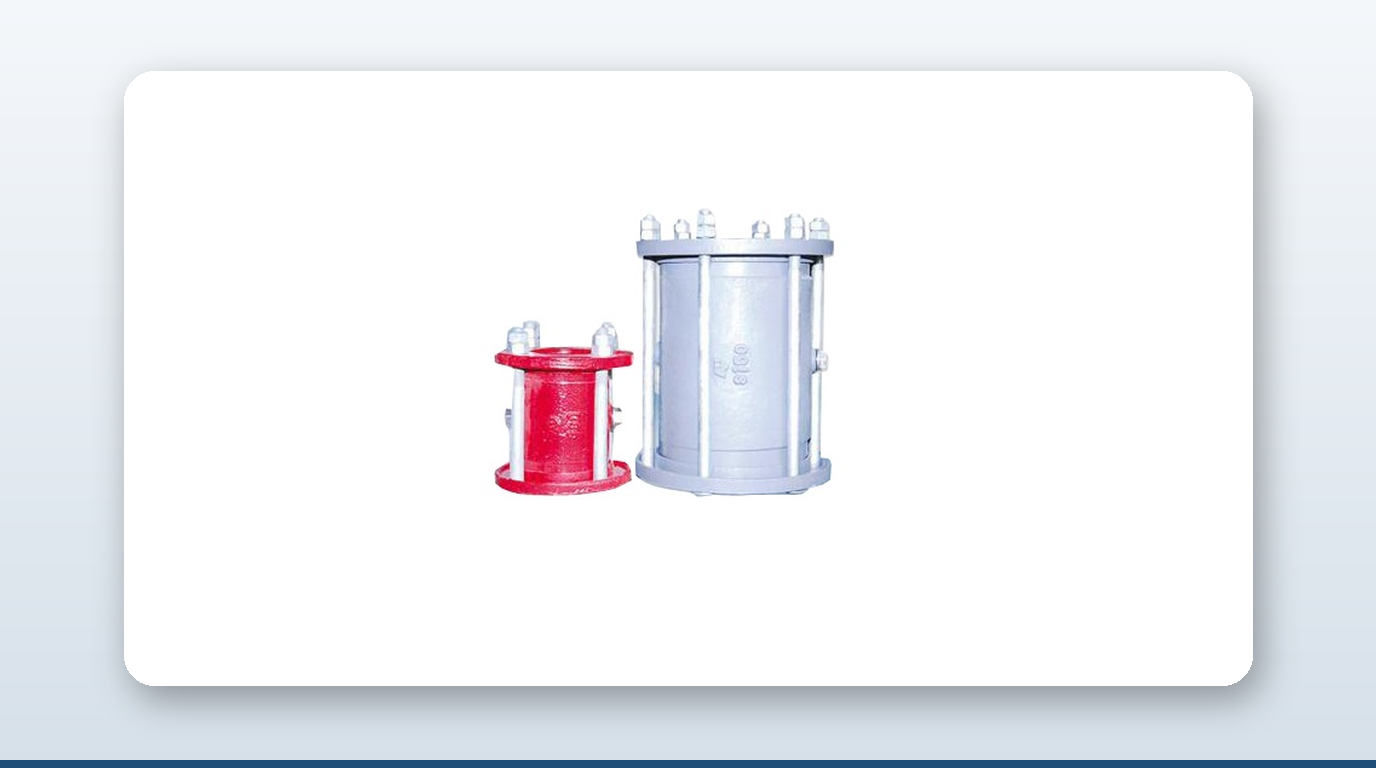
A coupling that leaked six months after installation is rarely a manufacturing defect — it’s usually a material choice that didn’t match the environment. Corrosion is the single largest cause of premature coupling failure on industrial and marine piping, and it is almost entirely preventable with the right combination of housing material, gasket compound, and installation practice chosen up front.
This guide covers what actually causes coupling corrosion, how the common housing materials compare in resistance, why the gasket matters as much as the housing, and how to select the right combination for indoor dry service, outdoor exposure, marine and coastal environments, and chemical-adjacent lines.
What Causes Pipe Coupling Corrosion
Corrosion on a mechanical pipe coupling is rarely one single mechanism. In practice it’s usually a combination of the following:
Moisture and humidity. Singapore’s climate — consistently high humidity, frequent rain, and coastal air — accelerates corrosion on any unprotected ferrous surface, whether the coupling is installed indoors or out. Condensation on cold-water lines and standing moisture in poorly drained plant rooms both count as continuous exposure, even without direct rain contact.
Chemical exposure. Process lines carrying anything beyond clean water — chlorinated water, mild acids or alkalis, hydrocarbons, or wash-down chemicals — attack unprotected carbon steel and some elastomer gaskets far faster than atmospheric exposure alone.
Galvanic corrosion between dissimilar metals. This is the mechanism most often missed at spec stage. When two different metals are in electrical contact in the presence of an electrolyte (seawater, brackish water, or even damp air), the less noble metal corrodes preferentially — sometimes dramatically faster than it would on its own. A carbon-steel coupling housing bolted directly to a stainless or copper-alloy pipe run, with no isolating gasket or insulation kit, sets up exactly this condition. The size of the effect scales with the area ratio between the two metals: a small area of the less-noble metal in contact with a large area of the more-noble metal corrodes especially fast, because all the galvanic current concentrates on the smaller anodic surface.
Crevice and pitting corrosion. Tight, low-oxygen gaps — under a gasket, inside a bolt thread, at a housing overlap — can corrode even on materials that resist general corrosion well, including some stainless grades in stagnant or chloride-rich water. This is a localised, hard-to-spot failure mode rather than uniform surface rust.
Housing Material Options and Their Corrosion Resistance
| Material | Corrosion resistance | Typical use case | Notes |
|---|---|---|---|
| Carbon steel (coated) | Low uncoated; moderate with quality coating (epoxy, galvanising, or paint system) | Indoor, dry or low-humidity service; cost-sensitive projects with a maintained coating | Coating integrity is everything — a scratched or worn coating corrodes faster than bare steel in some conditions because the coating traps moisture against the exposed spot |
| Ductile iron | Moderate, better with lining and coating | Water infrastructure mains, utility water, general industrial service | Cost-effective at larger diameters; usually specified with an internal lining plus external coating for buried or wet service |
| Stainless steel (300-series, e.g. 304/316) | Good general resistance; 316 grades resist chlorides better than 304 | Outdoor exposure, food/beverage, general marine-adjacent service, chemical-light environments | Stainless is not immune to corrosion — it depends on continuous exposure to oxygen to maintain its passive protective layer; stagnant, low-oxygen, chloride-rich conditions (a badly drained sump, a dead-leg line) can still cause pitting or crevice corrosion on stainless |
| Higher-alloy / duplex and super-duplex stainless | High | Aggressive marine, high-chloride, or chemical process environments where standard 316 is marginal | Higher cost; typically reserved for the most demanding environments rather than general-purpose use |
The practical rule: material selection should match the actual service environment, not just the “worst case” assumption or the cheapest option. Over-specifying a high-alloy housing on a dry indoor line wastes budget; under-specifying a coated carbon-steel housing on an outdoor coastal line invites early failure.
Galvanic Corrosion: The Mistake That Isn’t About the Coupling Itself
One of the most common corrosion failures on a coupling isn’t a fault with the coupling’s own material — it’s a mismatch between the coupling housing and the pipe it’s clamped to. Bolting a carbon-steel coupling onto a stainless or copper-alloy pipe run, or the reverse, without addressing the galvanic pairing, sets up continuous current flow at every point of metal-to-metal contact once moisture is present.
Ways to manage this risk:
- Match housing material to pipe material where practical, so both sides of the joint sit close together on the galvanic scale.
- Use isolation — a dielectric gasket, insulating sleeve, or isolation kit — where dissimilar metals must be joined, particularly in marine or high-humidity environments.
- Avoid small-anode, large-cathode configurations. A small area of the less-noble metal in contact with a large area of the more-noble metal is the worst-case geometry — it concentrates corrosion on the smaller part rather than spreading it out.
- Confirm bolt and stud material matches the housing’s corrosion class — a corrosion-resistant housing paired with lower-grade fasteners simply moves the failure point to the bolts.
This is a specification question, not an installation afterthought. Getting it right at RFQ stage — stating both the coupling material and the pipe material it will be clamped to — is the cheapest possible fix.
The Gasket’s Role in Preventing Crevice Corrosion
The gasket does more than seal against pressure loss — a well-fitted, chemically compatible gasket also protects the joint from crevice corrosion by maintaining even, continuous contact against the pipe surface and excluding the moisture and oxygen gradient that drives localised attack.
Key considerations when matching gasket material to service:
- EPDM is a common general-purpose choice for water and mild weathering exposure, but is not compatible with hydrocarbons or oils — using it on a fuel or lube-oil line will degrade the compound and open a leak path.
- NBR (nitrile) handles fuel and oil service well but degrades under ozone and some chlorine exposure — the wrong choice for outdoor ozone-exposed installations or heavily chlorinated water.
- Viton (FKM) offers broader chemical and higher-temperature resistance for more demanding process or hot-oil service, at a higher cost than EPDM or NBR.
- A gasket that has degraded, hardened, or lost compression no longer excludes moisture from the joint face — even a corrosion-resistant housing will develop crevice attack under a failed gasket, because the gasket’s mechanical seal and its corrosion-prevention role are the same function.
Matching the gasket compound to the actual fluid and temperature in the line — not just the water service assumed by default — is as important as the housing material choice. For a deeper look at gasket compound selection, see DPE’s guide to NBR, EPDM, and Viton gaskets.
Selecting by Environment
| Environment | Typical recommendation |
|---|---|
| Indoor, dry, low-humidity plant room | Coated carbon steel housing is usually adequate; standard EPDM or NBR gasket per fluid service |
| Outdoor, uncovered, tropical humidity (no direct seawater) | Stainless steel (304/316) or well-maintained coated ductile iron; EPDM gasket for water service |
| Marine, coastal, or splash-zone exposure | 316 stainless minimum, higher alloy where chloride exposure is severe or continuous; galvanic isolation mandatory where the coupling meets a dissimilar-metal pipe run; gasket compound matched to seawater or process fluid |
| Chemical-adjacent or process lines | Material and gasket selection driven by the specific chemical and concentration involved — confirm compatibility before ordering rather than defaulting to a standard water-service spec |
Maintenance Practices That Extend Service Life
Material selection sets the ceiling on coupling life; maintenance determines whether that ceiling is actually reached.
- Inspect coatings and platings periodically on carbon-steel and coated ductile-iron housings, especially at bolt heads and housing edges where coating wear concentrates.
- Check gasket condition at scheduled maintenance intervals — hardening, cracking, or loss of compression are early warning signs of both a seal failure and a crevice-corrosion risk developing underneath.
- Re-torque bolts to specification rather than assuming initial installation torque holds indefinitely — under-torqued joints allow micro-movement that accelerates both mechanical wear and localised corrosion at the contact points.
- Keep drainage clear around outdoor and utility installations. Standing water at the base of a coupling housing is a continuous-exposure condition, even where the surrounding environment is otherwise moderate.
- Flag any dissimilar-metal joint for isolation-kit inspection during routine maintenance — insulation gaskets and sleeves degrade over time and need periodic verification, not just installation-stage attention.
Key Takeaways
- Corrosion on a coupling is usually a material-environment mismatch, not a defect. Match housing material and gasket compound to the actual service condition, not the cheapest default.
- Galvanic corrosion between dissimilar metals is a common, avoidable failure mode. Match materials where practical and isolate where you can’t — especially on marine or high-humidity installations.
- The gasket protects against crevice corrosion as much as it seals against pressure. A degraded gasket opens both a leak path and a corrosion path at the same time.
- Stainless steel is corrosion-resistant, not corrosion-proof. Stagnant, low-oxygen, chloride-rich conditions can still cause pitting on standard stainless grades.
- Select by environment, not by habit. Indoor dry service, outdoor humid exposure, marine/coastal, and chemical-adjacent lines each call for a different material and gasket combination.
About David Phee Enterprise
David Phee Enterprise supplies pipe couplings, repair clamps, and expansion joints across a range of housing materials and gasket compounds, including corrosion-resistant options for marine, coastal, and chemical-adjacent service, as the exclusive Singapore distributor for Jeong Woo Coupling (JWC). DPE’s technical team supports material and gasket selection at RFQ stage — including galvanic-pairing checks against the existing pipe material — before an order is placed, reducing the risk of a costly early-life failure. Visit davidphee.com to discuss material selection for your specific environment.