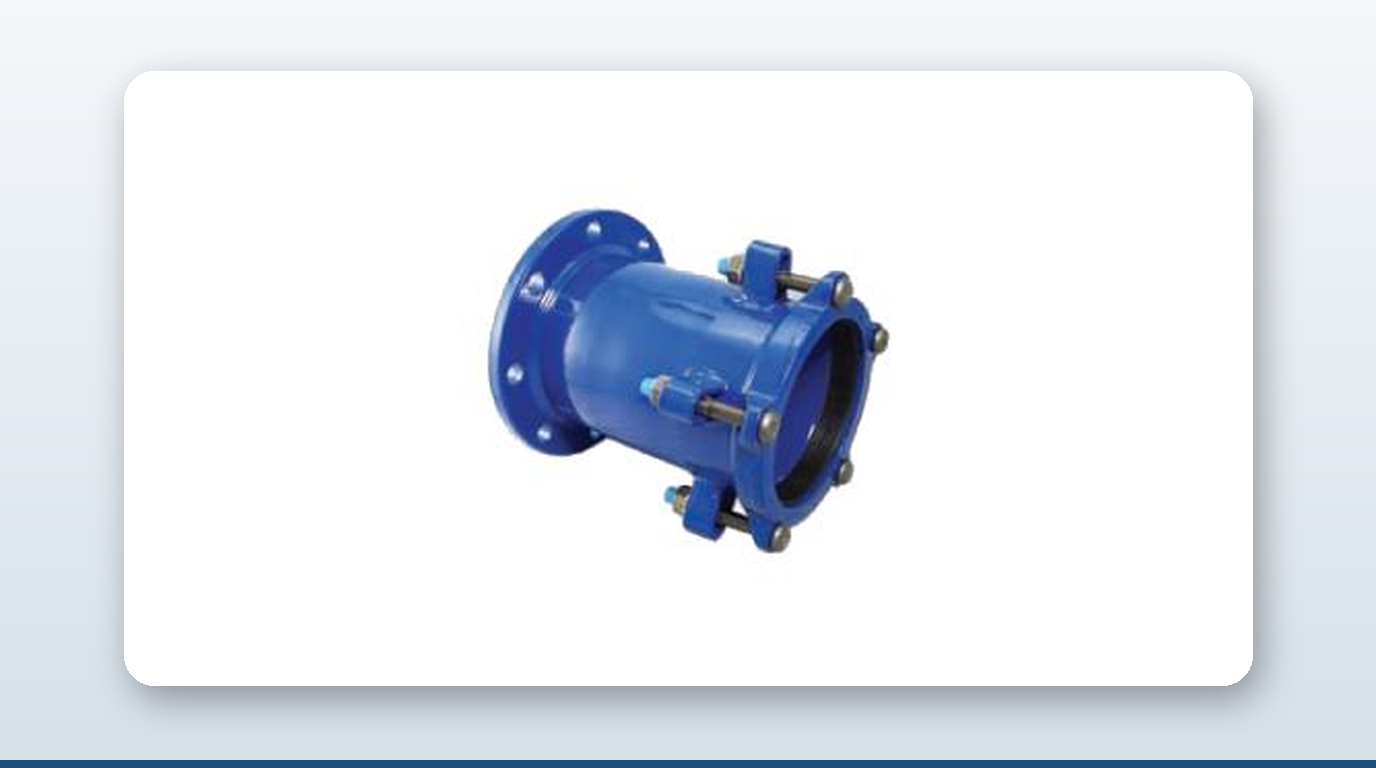
Water treatment plants run some of the least forgiving piping environments in industrial infrastructure. The water is either not yet safe to drink or has just been made safe, the plant rarely stops running long enough for a shutdown, and every fitting on the line has to survive years of near-constant flow without failing in a way that contaminates the product or floods the plant floor. Choosing the right water treatment plant pipe fittings is not a minor spec line — it determines whether maintenance is a scheduled task or an emergency.
This guide covers what actually differs about treatment-plant piping versus a standard industrial line: the corrosion and material demands, the pressure and access constraints, why mechanical couplings have become the default choice for retrofits and repairs in live plants, and how gasket material selection changes depending on whether the fitting sits on the potable side or the raw/process water side.
What Makes Water Treatment Plant Piping Different
Three characteristics separate treatment-plant piping from a typical factory or building services line:
Continuous wet exposure. Unlike compressed air or steam lines that can be isolated and drained, treatment-plant pipework is wet almost permanently — raw intake, coagulation, filtration, clear-water storage, and distribution headers are all in near-continuous service. Any fitting exposed to intermittent air/water cycling (splash zones, partially-filled channels) corrodes faster than a fully submerged or fully dry line.
Chemical dosing zones. Coagulant, chlorine, and pH-adjustment dosing points expose nearby fittings to more aggressive water chemistry than the bulk flow. Gaskets and metal housings near dosing points need to tolerate a wider chemical range than fittings further downstream.
Near-zero shutdown tolerance. A treatment plant supplying a live network cannot go offline for a standard maintenance window the way a factory line can. Fitting selection has to account for how a joint will be worked on — inspected, tightened, or replaced — while the rest of the plant keeps running.
These three factors push most plant engineers toward the same conclusion: fittings need to be corrosion-resistant by material choice (not just coating), rated for the actual working pressure with margin, and serviceable without taking the surrounding line out of commission.
Material Selection: Corrosion Resistance and Potable-Water-Safe Fittings
Material choice for water treatment plant pipe fittings comes down to where the fitting sits in the treatment train and what’s flowing through it.
| Zone | Typical pipe material | Fitting housing | Notes |
|---|---|---|---|
| Raw water intake | Ductile iron, mild steel (coated) | Coated carbon steel or stainless | Higher solids/sediment load; abrasion resistance matters as much as corrosion resistance |
| Coagulation / flocculation | Mild steel, HDPE, GRP | Stainless or coated steel | Chemical dosing nearby — check gasket chemical compatibility |
| Filtration / backwash | Ductile iron, GRP | Stainless steel preferred | Cyclic pressure from backwash cycles |
| Clear-water storage & transfer | Ductile iron, stainless steel | Stainless steel | Potable-contact zone — material certification requirements apply |
| Distribution / potable mains | Ductile iron (DI), stainless | Stainless steel, coated DI-compatible fittings | Highest scrutiny — direct public water contact |
For anything downstream of disinfection that will reach a consumer, the fitting housing, gasket, and any coating in contact with the water need to meet potable-water-contact requirements under Singapore’s water infrastructure regulatory framework. This is a real gate, not a formality — a fitting that performs fine mechanically can still be unsuitable if its wetted materials aren’t approved for potable contact. On the raw-water and process side, the bar is lower but corrosion resistance still drives total cost of ownership: a mild-steel fitting that needs replacing every few years in a wet-dry cycling environment usually costs more over ten years than a stainless equivalent installed once.
Stainless steel (SUS 304/316) housings are the standard default across most of DPE’s coupling range precisely because they hold up across this whole spectrum — raw water, dosing zones, and potable-contact applications — without needing a different base material for each zone.
Why Mechanical Couplings Suit Treatment Plant Retrofits and Maintenance
Welding and hot work inside an active water treatment plant is a genuine operational headache. It requires isolating the line, draining it, permitting the hot work, and — depending on the plant’s fire and safety protocols — potentially shutting down adjacent processes for the duration. On a plant that can’t fully stop, that’s expensive downtime measured in lost throughput, not just labour hours.
Mechanical pipe couplings solve this directly. A grip-type or flexible coupling joins two pipe ends by clamping and compressing a gasket around the pipe OD — no flame, no fusion, no curing time. That makes them the practical default for:
- Retrofits on live lines — adding a tie-in, branch connection, or bypass without draining and re-commissioning the whole section
- Emergency repair of a failed joint or cracked pipe section — a repair clamp or coupling can go on in the time it takes to isolate the section, versus hours for a welded repair
- Planned replacement of aging cast-iron or steel sections — couplings accommodate minor OD and alignment variance between old and new pipe, which a rigid weld cannot
- Vibration and thermal movement absorption at pump connections, where a rigid weld would transmit stress into the joint over time
This is also why mechanical couplings are the standard joining method specified for pumping mains and sewer force mains in Singapore’s water infrastructure code of practice — the requirement for pipe joints in exposed or accessible locations to be mechanically restrained (via coupling, joint restrainer, or encapsulation clamp) rather than left to rely on friction fit is a recurring theme across water infrastructure standards generally, reflecting how much maintenance activity happens around these joints over a pipe’s service life.
For a broader comparison of how mechanical couplings differ from flanged and welded joints on installation time and disruption, see our pipe coupling installation guide.
Gasket Material Considerations: Potable vs Raw Water
The gasket is the part of a coupling actually in contact with the fluid, and it is the single most application-specific component to get right.
NBR (nitrile rubber) is the standard choice for sewage, wastewater, and non-potable raw water. It resists oils, greases, and the general chemical profile of used or raw water well, and it’s the material typically specified for sewer pumping main couplings under Singapore’s sewerage code of practice.
EPDM handles a wider temperature range and better ozone/weathering resistance, and is commonly used on treated or clear water lines and outdoor-exposed fittings where UV and ambient weathering matter more than sewage-specific chemical resistance.
FKM (Viton) is reserved for aggressive chemical dosing zones — chlorine dioxide, ozone contact points, and other locations where standard elastomers degrade faster than the maintenance schedule can catch. It costs more, so it’s typically specified only where the chemistry demands it rather than as a blanket default.
For any fitting on the potable-contact side of a plant, the gasket material needs to be verified against Singapore’s potable-water material approval requirements — this is a stacked certification requirement, not a single spec sheet claim, and it’s worth confirming with your supplier before ordering rather than after installation. For a deeper look at how NBR, EPDM, and FKM compare across applications, see our guide to NBR, EPDM, and FKM gasket selection.
Pressure Ranges and Maintenance Access
Treatment plant pipework generally runs at lower working pressures than high-pressure industrial process lines, but the pressure profile is rarely flat. Backwash cycles on filtration systems produce short pressure spikes well above steady-state flow, and pump start/stop transients create surge conditions that a fitting rated only for average operating pressure can miss.
Two practical implications for fitting selection:
- Rate for the surge, not the average. A coupling or clamp rated only to the nominal working pressure of the line may be marginal during backwash or pump-start transients. Specify against the peak, not the mean.
- Design for access, not just performance. Plant layouts change over the life of an asset — new dosing points get added, filtration trains get expanded, pump configurations change. Fittings installed with maintenance access in mind (clear space around bolts, coupling type that doesn’t require special tools) save far more time over a plant’s service life than the marginal cost difference between fitting types.
Key Takeaways
- Water treatment plant pipe fittings face continuous wet exposure, dosing-zone chemistry, and near-zero shutdown tolerance — all three push toward corrosion-resistant materials and mechanical, rather than welded, joining methods.
- Material choice depends on treatment-train position. Raw water and process zones can use coated steel or ductile iron; potable-contact zones require materials verified against Singapore’s potable-water approval requirements.
- Mechanical couplings avoid hot work in live plants, making them the practical default for retrofits, emergency repairs, and planned replacement on lines that can’t be fully shut down.
- Gasket material must match the water type — NBR for sewage/raw water, EPDM for treated/clear water and outdoor exposure, FKM for aggressive chemical dosing zones.
- Size for surge pressure, not average flow, and specify fittings with maintenance access in mind — plant configurations change more often than the pipework does.
About David Phee Enterprise
David Phee Enterprise is the exclusive Singapore distributor for Jeong Woo Coupling (JWC) and a long-standing supplier of Aju, Romacon, and Smith-Blair pipe couplings and repair clamps, operating from Empire Technocentre in Kaki Bukit. DPE supplies contractors and MEICA subcontractors working on Singapore’s water infrastructure projects with same-day delivery on stocked fittings across the full range of stainless-steel housing and NBR/EPDM/FKM gasket options covered above. For sizing support or stock checks on a specific treatment-plant application, visit davidphee.com.