The material call on a pipe coupling looks simple until the environment fights back. A carbon-steel coupling that performs perfectly in a dry, indoor process line will start rusting within months bolted to a weather deck or buried in a corrosive soil. A stainless-steel coupling specified for every application on a project inflates the budget for runs that never needed it. Getting this choice right — coupling by coupling, not blanket-specified across a whole project — is one of the more consequential and most commonly rushed decisions in a piping spec.
This article compares stainless steel and carbon steel pipe couplings on the factors that actually drive the decision: corrosion resistance, cost, and mechanical strength. It covers where each material is the practical default, how coatings extend carbon steel’s usable range, and how to choose based on environment and budget rather than habit.
Material Properties: What Actually Differs
Carbon steel couplings are typically fabricated from mild or structural steel — strong, relatively inexpensive to produce, and easy to machine and weld. Its weakness is corrosion: bare carbon steel oxidizes readily in the presence of moisture, and that process accelerates sharply in salt-laden or chemically aggressive environments. Left uncoated in a wet or marine setting, a carbon-steel coupling housing can show surface rust within weeks.
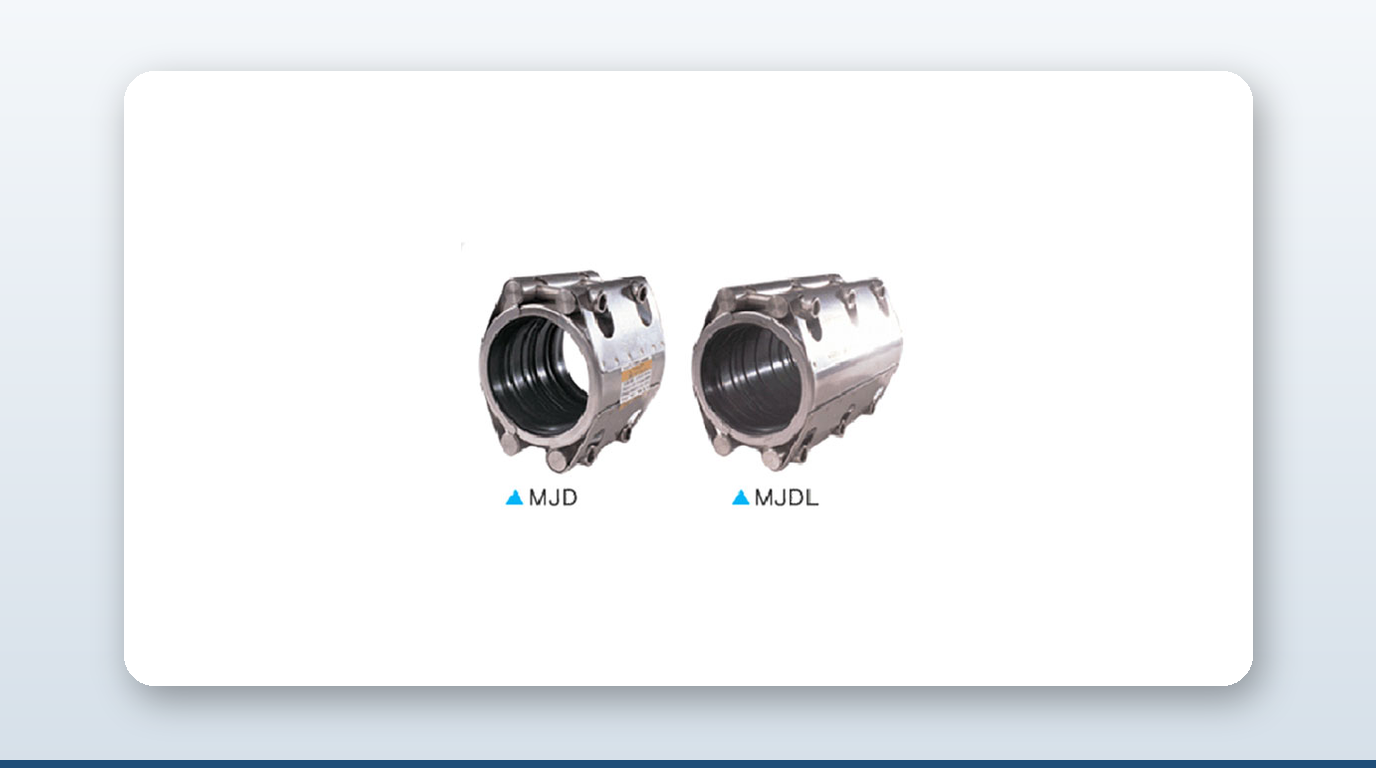
Stainless steel couplings — commonly SUS 304 or SUS 316 grade in JWC’s product range, with SUS 301H grip rings — derive their corrosion resistance from chromium content, which forms a passive oxide layer on the surface that self-repairs when scratched. SUS 316 adds molybdenum, which improves resistance specifically against chloride attack — the dominant corrosion mechanism in seawater and salt-spray environments. This is why 316-grade stainless is the standard reach for marine coupling housings rather than 304.
Carbon-steel coupling and clamp hardware — such as tapping sleeves and repair fittings built to ASTM carbon-steel standards — remains widely available for general industrial and water-utility applications where a coating or lining manages the corrosion risk.
On raw mechanical strength, the two materials are broadly comparable at the grades typically used in coupling manufacture — the choice is rarely made on strength alone, since both materials are engineered to the pressure rating the coupling is designed for. The decision is almost always about corrosion, cost, and the cost of failure.
Corrosion Resistance and Application Fit
This is the single biggest driver of coupling material choice, and it maps closely to environment rather than to pipe size or pressure rating.
Carbon steel fits dry, general-industrial, indoor service. Process lines in a climate-controlled plant room, dry compressed-air lines, and general water lines with a coating or lining all tolerate carbon steel well, because the coupling is not directly exposed to standing moisture or salt.
Stainless steel fits marine, corrosive, and food/water-contact applications. JWC’s coupling range is built around SUS 304/316 casing with EPDM, NBR, silicone, or FKM (Viton) rubber seals precisely because DPE’s core customer base — ship chandlers, shipyards like Seatrium, and marine engine room installations — sits in a salt-spray and immersion environment where uncoated carbon steel corrodes fast. Potable water and food-contact lines also favor stainless for hygiene and to avoid contaminating the product stream with corrosion byproducts.
The practical test is simple: if the coupling will ever see standing water, salt spray, wash-down chemicals, or direct seawater contact, stainless is the safer default. If the line stays dry and indoors for its service life, carbon steel is usually adequate — with a coating in most real-world cases, covered below.
Cost Tradeoffs
Stainless steel couplings cost materially more than carbon steel equivalents at the same size and pressure rating — the raw material itself is more expensive, and stainless is generally slower and more costly to machine. On a large project with many joints, specifying stainless across the board where it is not needed adds a real budget line with no corresponding benefit on the dry-service portions of the run.
Carbon steel’s lower unit cost only holds up as a genuine saving if the corrosion environment is actually benign, or if a coating closes the gap (see below). Specifying uncoated carbon steel into a marine or corrosive setting to save on unit price is a false economy — the coupling fails early, and the cost of an unplanned shutdown, a leak, or a full coupling replacement in a hard-to-access location usually dwarfs the original material saving.
The sound approach is matching material to environment joint-by-joint rather than defaulting the whole project to one material in either direction.
Coating Options for Carbon Steel
Where budget favors carbon steel but the environment carries some corrosion risk, a coating extends carbon steel’s usable range considerably without the full stainless-steel cost premium. Common approaches include epoxy coatings, hot-dip galvanizing, and other protective finishes applied to the coupling housing to slow oxidation.
A coated carbon-steel coupling is a reasonable middle option for moderate-exposure settings — sheltered outdoor runs, mild industrial atmospheres, or applications where periodic recoating during maintenance is acceptable. It is not a substitute for stainless in continuous salt-spray or immersion service, where the coating itself is subject to abrasion and eventual breakdown, exposing bare steel underneath. For sizing the coupling correctly regardless of material, see our guide to pipe OD vs nominal bore.
Stainless Steel vs Carbon Steel Coupling Comparison Table
| Factor | Carbon Steel Coupling | Stainless Steel Coupling |
|---|---|---|
| Corrosion resistance | Low uncoated; moderate with coating | High — SUS 304/316 passive oxide layer |
| Chloride / seawater resistance | Poor uncoated | Strong, especially SUS 316 (adds molybdenum) |
| Relative unit cost | Lower | Higher |
| Machining / fabrication cost | Lower | Higher |
| Typical environment | Dry, indoor, general industrial | Marine, corrosive, food/water-contact |
| Coating available | Yes — epoxy, galvanizing | Not typically needed |
| Typical DPE customer fit | Onshore process lines, dry utility runs | Ship chandlers, shipyards, marine engine rooms |
How to Choose Based on Environment and Budget
- Start with the environment, not the budget. If the coupling sees salt spray, immersion, wash-down chemicals, or potable water/food contact, stainless is the starting assumption.
- Check for chloride exposure specifically. Marine and coastal settings call for SUS 316 over SUS 304 where budget allows, because of its added chloride resistance.
- For dry indoor service, carbon steel is usually the economical, correct choice — with a protective coating if there is any intermittent moisture exposure.
- Don’t blanket-specify one material across a whole project. Match material coupling-by-coupling to the actual exposure of that section of pipe run — this is where real budget savings come from without compromising the joints that need protection.
- Factor in access and maintenance cost, not just unit price. A coupling in a hard-to-reach or safety-critical location justifies the stainless premium even in a marginal corrosion environment, because replacement cost and downtime are higher than the material difference.
FAQ
Is stainless steel always better than carbon steel for pipe couplings?
Not on cost or machinability — stainless is the better technical choice mainly where corrosion resistance is the priority. For dry, indoor, general-industrial service, carbon steel performs well and costs less.
What’s the difference between SUS 304 and SUS 316 stainless couplings?
SUS 316 adds molybdenum, which significantly improves resistance to chloride-induced corrosion — the reason 316 is the standard grade for marine and seawater-exposed couplings, while 304 suits general indoor or dry-service stainless applications.
Can a coated carbon-steel coupling replace stainless in a marine application?
Not for continuous salt-spray or immersion service. A coating helps in moderate-exposure settings, but it can abrade or break down over time and expose bare steel — stainless is the safer choice for sustained marine contact.
Does DPE stock both stainless and carbon steel couplings?
DPE sources stainless-grade couplings through JWC’s product range and carbon-steel coupling and clamp hardware through its wider supplier network, and can advise on the right material for a given environment during quotation.
Key Takeaways
- Corrosion resistance, not strength, drives the stainless-vs-carbon-steel decision for most coupling applications — both materials are engineered to their rated pressure regardless of choice.
- Stainless steel (SUS 304/316) is the standard for marine, corrosive, and food/water-contact service, which is why it dominates ship chandler and shipyard coupling specs.
- Carbon steel is the economical, correct choice for dry, indoor, general-industrial lines, especially with a protective coating for moderate exposure.
- Coatings extend carbon steel’s range but don’t replace stainless in continuous salt-spray or immersion environments.
- Match material to environment joint-by-joint rather than specifying one material across an entire project — this is where real cost control happens without under-protecting the joints that need it.
About David Phee Enterprise
David Phee Enterprise is the exclusive Singapore distributor for Jeong Woo Coupling (JWC), whose coupling range is built on SUS 304/316 stainless casing with SUS 301H grip rings, paired with EPDM, NBR, silicone, or FKM rubber seals depending on the fluid and environment. Alongside JWC, DPE’s supplier network also covers carbon-steel coupling and clamp hardware for general-industrial and water-utility applications. Operating from Empire Technocentre in Kaki Bukit, DPE supplies ship chandlers, shipyards, and industrial contractors across Singapore, Malaysia, and Indonesia with same-day delivery and material guidance for both marine-grade and general-industrial applications. Visit davidphee.com for sizing enquiries, datasheets, and stock checks.