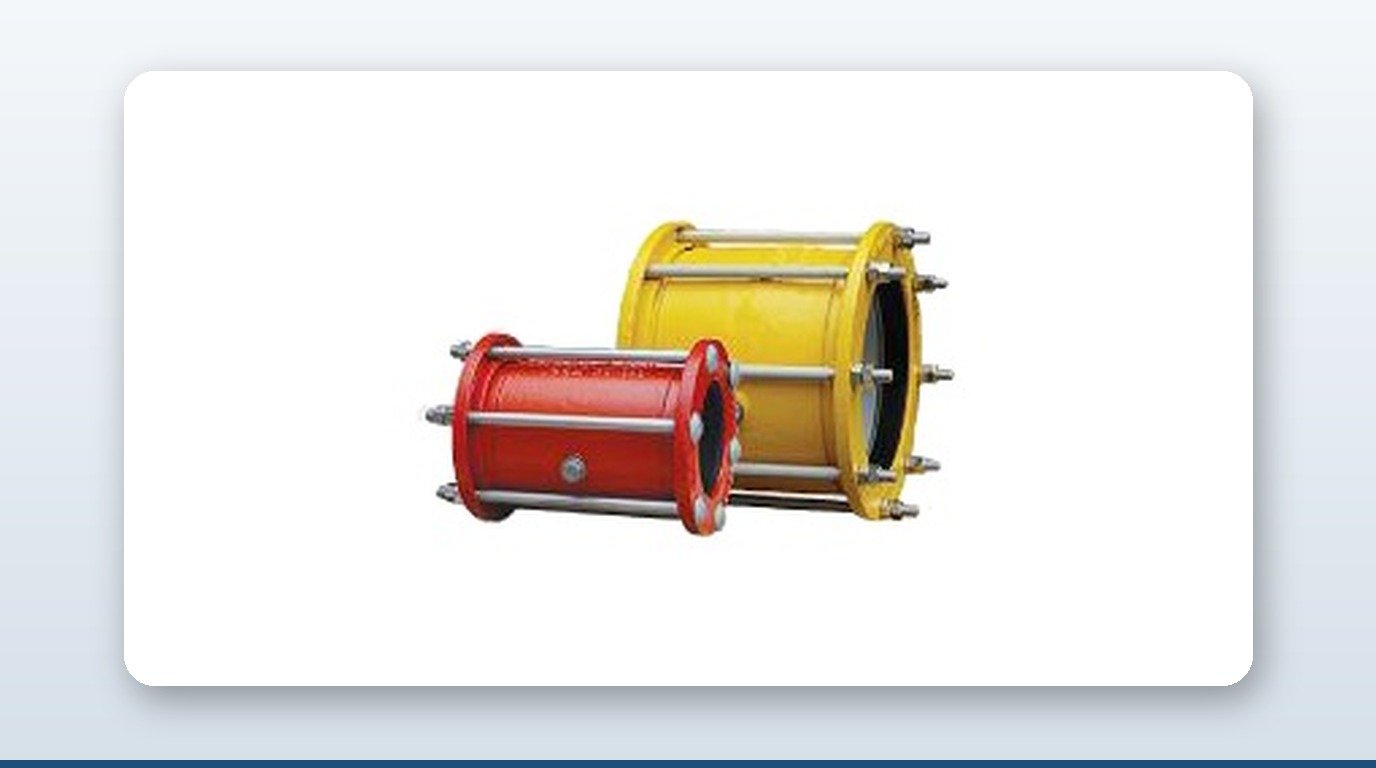
A power plant doesn’t get the luxury of a convenient shutdown window when a cooling-water line starts leaking. Unlike a batch chemical process that can be paused, a combined-cycle gas turbine feeding the grid is expected to keep running, and an unplanned outage on the utility side — seawater cooling, fire protection, demineralised water — can force a derate or trip even though the turbine and boiler themselves are perfectly healthy. That operating reality shapes what Singapore’s generation companies specify for pipework, and it draws a sharp line between the piping that must be welded and the piping where a mechanical coupling is the sensible, spec-compliant answer.
Singapore’s power-generation sector is not a small market. As of the most recent Energy Market Authority data, total licensed generation capacity sits at roughly 13,261 MW, with combined-cycle, cogeneration, and trigeneration plant accounting for 81.3% of that — about 10,115 MW — and natural gas supplying roughly 94% of the fuel mix. For procurement and maintenance teams working across this sector, understanding where mechanical couplings fit into that generation fleet is the starting point for any sensible piping specification.
Where the Line Sits: Welded Process, Mechanical Utility
Every power plant on this list — whichever fuel, whichever turbine vendor — draws the same basic distinction. High-pressure steam piping running from boiler or heat-recovery steam generator (HRSG) to turbine is welded to ASME B31.1, full stop; the pressures and temperatures involved are well beyond anything a mechanical joint is rated for. HRSG pressure parts — tubes, headers, drums — are welded or flanged to ASME Section I. Gas-turbine fuel-gas lines run to ASME B31.3 Category M, again welded-only. And on the newer hydrogen-ready plant coming online across Singapore’s generation fleet, hydrogen fuel-gas piping is welded without exception, because hydrogen embrittles most elastomeric seal materials and tolerates zero compromise on joint integrity.
That’s the no-play list, and it’s worth being direct about it rather than pretending otherwise. The systems where mechanical couplings genuinely compete sit on the balance-of-plant and utility side:
| System | Mechanical couplings? | Notes |
|---|---|---|
| Seawater cooling-water intake / discharge | Yes | Ambient temperature, low-medium pressure |
| Cooling-tower return mains | Yes | Same water chemistry; also absorbs vibration |
| Condenser cooling-water circuit | Yes | On low-pressure utility circuits |
| Demineralised / plant-service-water headers | Yes | Non-potable utility spec |
| Fire-protection ring main | Yes, if UL/FM-listed | Listing is mandatory, not optional |
| Fuel-oil day-tank room piping | Yes, where flanged/grooved is spec’d | Repair clamps for emergency work |
| Plant-air / instrument-air laterals | Yes | Low-pressure compressed air |
| Plant drain / sewer | Yes | Low-pressure wastewater |
| Emergency in-service leak repair | Yes | Repair clamps across any utility header |
HRSG exhaust duct and stack expansion joints are a partial exception — expansion joints are routinely used there, but the flue-gas temperatures involved (well above 500°C in places) put them outside standard bellows-coupling range and into specialist fabric expansion-joint territory rather than a general mechanical coupling.
The Systems That Are Off the Table
It’s worth stating the exclusions as clearly as the inclusions, because a supplier that pretends otherwise wastes an engineer’s time. HP steam lines, HRSG pressure parts, gas-turbine fuel-gas piping, and hydrogen fuel-gas lines on newer plant are all welded-only for the reasons above. LNG and cryogenic fuel lines — relevant at Singapore’s LNG-fuelled generation assets — are similarly butt-welded in cryogenic-rated stainless steel; no elastomeric-gasketed coupling belongs anywhere near that service. None of this is a Singapore-specific quirk — it’s standard international practice for thermal power generation — but it’s worth stating plainly before any coupling conversation starts, so the scope discussion focuses on where a mechanical joint genuinely helps.
Commissioning and Outage Windows Ahead
Singapore’s generation fleet is in an active investment cycle, and that matters directly for coupling demand, because new-build commissioning and major turbine outages are exactly when utility piping gets touched, extended, or replaced. Several major windows are on the calendar over the next few years: new combined-cycle plant is commissioning at more than one site through 2026 and into 2027, with hydrogen-ready and hydrogen co-firing capability increasingly built in from day one. Existing plant is also going through turbine upgrade programmes aimed at extending major maintenance intervals and enabling future hydrogen co-firing — these upgrade outages create an adjacent window for utility tie-in reroutes and repair-clamp stock refresh, even though the turbine work itself is unrelated to piping.
The pattern to watch for procurement planning is straightforward: a new combined-cycle block commissioning means an entirely new set of cooling-water, fire-main, and demineralised-water headers going in for the first time, which is the highest-value coupling and expansion-joint window a plant will see in its operating life. A turbine upgrade or major inspection on existing plant is a smaller but still real window, mostly for repair-clamp stock and utility reroute work around the outage boundary.
Procurement Channels for Power-Sector Utility Piping
Three broad channels tend to govern how mechanical couplings and repair clamps actually get bought into Singapore’s power sector. The first is through the plant’s operations and maintenance (O&M) contractor — a relatively small cluster of Singapore-based engineering and maintenance firms handles recurring turnaround and repair scope across multiple generation sites, and qualifying as a supplier to one of them is often the fastest realistic route into several plants at once. The second is direct procurement with the generating company itself, which tends to be a slower process but is the appropriate route for higher-value or plant-specific scope. The third, relevant specifically to new-build capacity, is qualification through the EPC contractor managing a plant’s construction — for a combined-cycle block under construction now, materials for utility piping are typically being procured well ahead of mechanical completion, so this window closes earlier than the O&M or direct-procurement routes.
Key Takeaways
- – Singapore’s generation fleet runs on roughly 13,261 MW of licensed capacity, with combined-cycle and cogeneration plant making up over 80% of that and natural gas supplying about 94% of fuel.
- – HP steam, HRSG pressure parts, gas-turbine fuel-gas lines, and hydrogen fuel-gas piping are welded-only across every plant — no mechanical coupling belongs in that scope.
- – Mechanical couplings are the correct, spec-compliant choice for seawater cooling, cooling-tower returns, demineralised-water headers, fuel-oil piping, and plant air — plus fire mains, provided the coupling carries UL or FM listing.
- – New-build commissioning windows generate the largest coupling and expansion-joint demand a plant will ever see; turbine upgrade outages on existing plant are a smaller but still meaningful window for repair-clamp and utility-reroute work.
- – O&M-contractor qualification is often the fastest practical route into multiple generation sites, ahead of direct genco procurement or EPC-stage qualification.
About David Phee Enterprise
David Phee Enterprise has supplied mechanical pipe couplings and repair clamps to Singapore’s industrial sector from its Kaki Bukit headquarters since 1990, and is the exclusive Singapore distributor for Jeong Woo Coupling (JWC). Same-day delivery from the Singapore HQ is designed for exactly the situations covered above — a cooling-water leak that can’t wait for a scheduled outage, or a utility tie-in that needs to be closed out before a commissioning deadline. For product specifications or an application review, DPE can be reached through davidphee.com or the contact page.