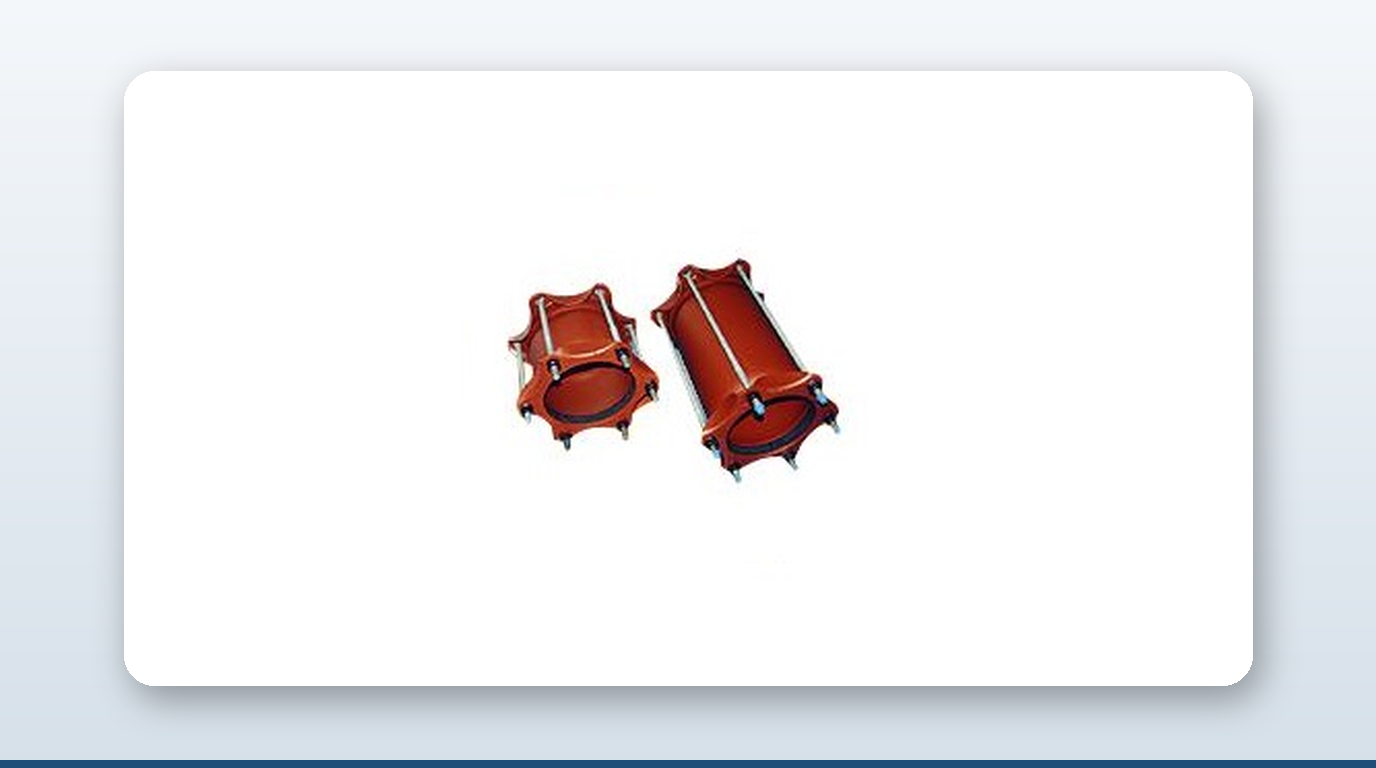
Every commercial building sprinkler system in Singapore ultimately answers to the same two documents: NFPA 13, the US standard for sprinkler installation, and the SCDF Fire Code 2023, which adopts NFPA 13’s logic through Singapore’s own SS CP 52. For anyone specifying or sourcing pipe couplings on a sprinkler riser, one rule matters more than any other: the coupling must be listed. Not “good quality,” not “pressure-tested to a high number” — listed, by a named testing laboratory, to a named standard.
This article breaks down what that listing requirement actually says, how it reaches Singapore through SCDF and SS CP 52, and where the line falls between the sprinkler riser (strict) and the buried fire main (more permissive). Getting this distinction right saves a lot of wasted quoting effort.
Why Listing Is the Real Gate (NFPA 13 §7.1.1.2)
NFPA 13 §7.1.1.2 states that unless a narrow exception applies, “all materials and devices essential to successful system operation shall be listed.” A pressure-containing coupling on a sprinkler line is unambiguously essential to system operation, so it falls squarely inside this clause. The exception in §7.1.1.5 — for components that “do not affect system performance” — does not rescue a coupling either, because a coupling is pressure-bearing and life-safety-critical by definition.
“Listed,” under NFPA 13 §3.2.3, means a product appears on a list published by an organisation recognised by the Authority Having Jurisdiction, which performs ongoing production audits, not just a one-time test. This is the detail that trips people up: a coupling can pass a hydrostatic burst test in a lab and still not be “listed” in the code sense, because listing requires the recurring factory audit that keeps the product on the list year after year.
How SCDF and SS CP 52 Adopt the Rule
The SCDF Fire Code 2023, Clause 6.4, defers sprinkler design and installation entirely to SS CP 52 — the Singapore Code of Practice for Automatic Fire Sprinkler Systems, which is explicitly aligned with NFPA 13 and BS EN 12845. SCDF itself does not maintain a separate coupling-approval scheme; the listing obligation flows through via SS CP 52’s alignment to NFPA 13.
Singapore adds one more layer on top: a Qualified Person (QP) — a Registered Professional Engineer, mechanical discipline — must submit and personally endorse the fire safety plan to SCDF. The QP is liable for the correctness of every product specified. In practice this means QPs default to writing “UL/FM listed grooved coupling” by reflex, because putting an unlisted coupling on a riser would require them to personally justify the substitution to SCDF — a risk no QP takes on a commercial job. The listing requirement and the QP’s personal liability reinforce each other; neither is a matter of brand preference.
UL 213 and FM 1920: What “Listed” Actually Means
Two listing standards cover grooved couplings for fire-protection service:
| Standard | Scope |
|---|---|
| UL 213 | Rubber-gasketed fittings for fire-protection service, including grooved couplings — referenced directly by NFPA 13 §7.5.3.1.1 for dimensional compatibility |
| FM 1920 | Pipe couplings and fittings for aboveground fire protection, covering threaded, grooved, welded, flanged, and plain-end joining methods, in sizes from 1 in. to 6 in. NPS |
FM 1920-approved assemblies must withstand an internal hydrostatic pressure of four times the rated working pressure — a minimum of 700 psi — without cracking, rupture, or permanent distortion. Typical listed grooved fire couplings carry a rated working pressure around 300 psi (UL) or 365 psi (FM), since the two labs rate independently even for the same physical product.
The important corollary: neither UL 213 nor FM 1920 has anything to do with a coupling’s marine class certificates. A coupling with IACS class approvals from seven societies, or a fire-endurance rating under ISO 19921 for shipboard use, is being tested for a completely different regulator answering a completely different question. Marine certification does not transfer into an SCDF/NFPA 13 listing — the two schemes simply don’t overlap.
Sprinkler Riser vs Fire Main: Two Different Rulebooks
This is the single most useful distinction for anyone sourcing coupling product for a fire system in Singapore:
| Sprinkler riser (aboveground) | Fire main (buried) | |
|---|---|---|
| Governing US standard | NFPA 13 | NFPA 24 |
| Governing SG standard | SS CP 52 | SS 575 |
| Listing posture | Strict — UL 213 / FM 1920 mandatory | Permissive — accepts mechanical/restrained joints and pipe clamps |
NFPA 24 explicitly permits “locking mechanical/push joints, setscrew retainer glands, bolted flange joints, pipe clamps/tie rods, or other approved devices” on the private fire service main — the same style of ductile-iron waterworks hardware used throughout the water-utility world (see our ISO, JIS, and BS coupling standards guide for how those cross-reference). A UL-listed full-circle repair clamp is admissible on the buried fire main for repair and restraint scope, even though the same clamp would never be admissible on the sprinkler riser above it. This is a code distinction, not a sales framing — the sprinkler riser and the fire main are governed by entirely separate clauses.
Where This Leaves Coupling Selection in Singapore
For a QP or MEP consultant, the practical checklist is short: on the sprinkler riser, specify a coupling carrying a current UL 213 or FM 1920 listing, verified against the manufacturer’s current listing directory entry — not a datasheet claim. On the fire main and hydrant reticulation outside the building, listed mechanical joints and full-circle repair clamps are the accepted, code-compliant repair method, and this is where a much wider range of coupling and clamp hardware legitimately applies, including in the pressure ratings and gasket condition ranges covered elsewhere on this site (see our gasket replacement guide for the annual-inspection angle that drives this repair-clamp demand).
David Phee Enterprise supplies mechanical pipe couplings across marine and industrial applications from Kaki Bukit, and is upfront with buyers about where listing gaps sit — a coupling’s marine class certificates are a genuine engineering credential, but they are a different credential from an SCDF-recognised fire listing, and the two should never be conflated in a quote. For fire-main repair and restraint scope, DPE can advise on UL-listed clamp options and same-day availability; visit davidphee.com for the current product range.
Key Takeaways
- NFPA 13 §7.1.1.2 requires that pressure-bearing sprinkler-system components be “listed” — a specific, audited credential, not a quality claim.
- SCDF Fire Code 2023 Clause 6.4 defers sprinkler design to SS CP 52, which aligns with NFPA 13; a Qualified Person’s personal liability reinforces the listing requirement in Singapore.
- UL 213 and FM 1920 are the two listing standards that matter for grooved fire couplings; FM 1920 covers 1–6 in. NPS with a minimum 4× burst-pressure test.
- Marine class certificates (IACS, ISO 19921) do not transfer into an SCDF/NFPA 13 fire listing — they answer a different regulator’s question.
- The sprinkler riser (NFPA 13 / SS CP 52) is strict on listing; the buried fire main (NFPA 24 / SS 575) accepts listed mechanical joints and repair clamps — know which side of that line your project sits on before quoting.
About David Phee Enterprise
David Phee Enterprise (DPE) is a Singapore-based industrial pipe coupling specialist based at Empire Technocentre, Kaki Bukit, and the exclusive Singapore distributor for JWC couplings. Founded in 1990, DPE serves ship chandlers, MEP contractors, and industrial plant operators across Singapore, Malaysia, and Indonesia with same-day delivery and straightforward technical advice.