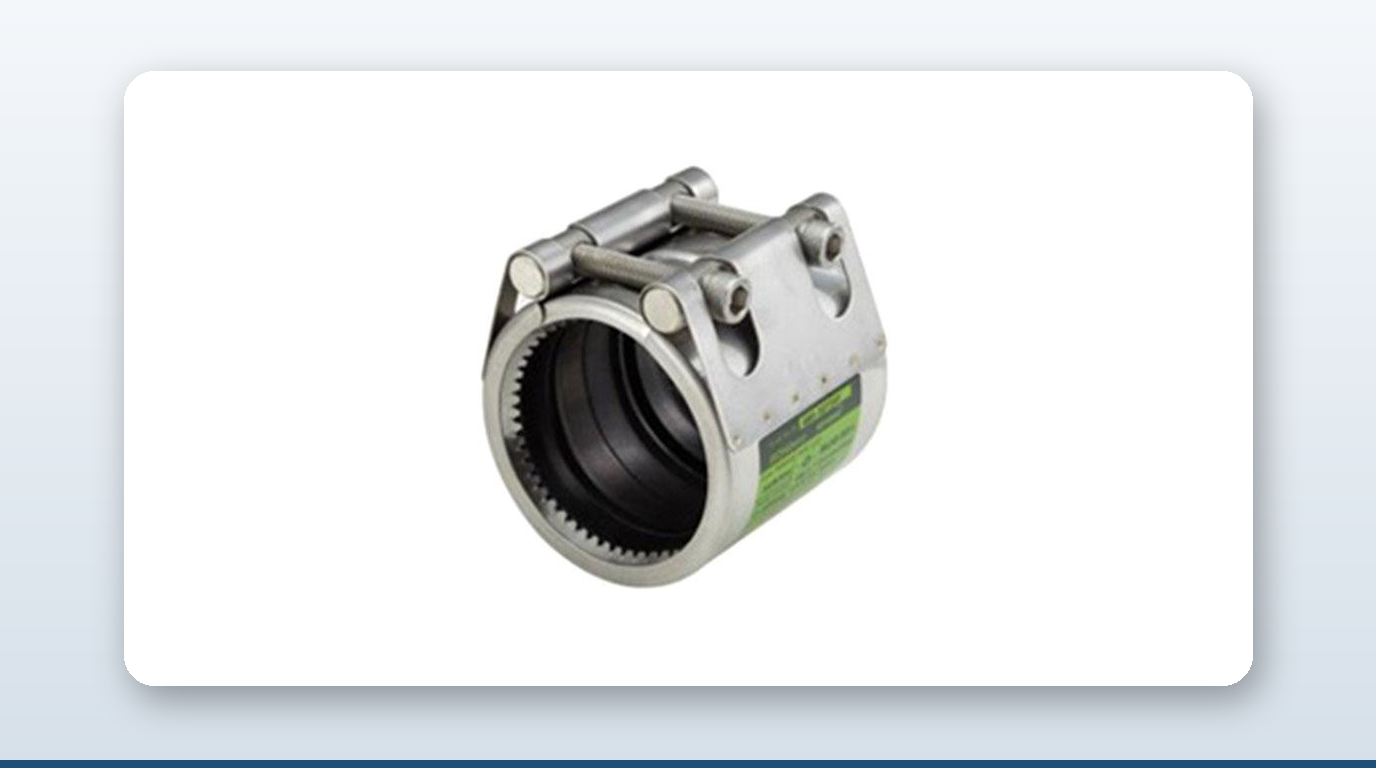
Buyers sourcing pipe couplings for projects in Malaysia, Indonesia, or elsewhere in Southeast Asia frequently end up buying from a Singapore-based supplier rather than from the coupling manufacturer directly — even though the product itself is made in Korea, the Netherlands, or elsewhere. Understanding pipe coupling export Singapore documentation and process explains why: Singapore’s position as a re-export hub means the paperwork, freight coordination, and lead time are usually simpler through a Singapore trader than through a direct import from the country of manufacture.
This guide covers why Singapore functions this way, what is generally involved in exporting industrial goods from a Singapore base, and what a buyer should ask a supplier before placing an order — without wading into country-specific customs detail that changes supplier to supplier and shipment to shipment.
Why Singapore Is a Natural Re-Export Hub for Pipe Couplings
Singapore’s port and logistics infrastructure — one of the busiest transshipment hubs in the world — means freight already moving through the region tends to pass through Singapore regardless of its final destination. A pipe coupling manufactured in Korea and destined for a shipyard in Batam or a water utility project in Johor often has a faster, cheaper routing through a Singapore consolidation point than a direct point-to-point shipment.
This is compounded by the way trading companies like DPE operate: a hub-and-spoke model, where inventory is held centrally in Singapore and dispatched outward to regional customers as orders come in. Rather than every Malaysian or Indonesian buyer negotiating separately with a Korean or European manufacturer — dealing with minimum order quantities, unfamiliar export paperwork, and freight schedules tuned to large-volume shipments — they buy from a Singapore stockist that has already imported the product, holds it locally, and re-exports smaller, project-sized quantities on shorter lead times.
For buyers, the practical effect is straightforward: ordering from a Singapore supplier is usually faster than ordering direct from the manufacturer’s home country, because the freight, consolidation, and paperwork have already been absorbed one step upstream.
What’s Generally Involved in Exporting Industrial Goods from Singapore
The exact process varies by destination country, shipment value, and the buyer’s own import requirements, but exporting industrial goods like pipe couplings out of Singapore typically involves a consistent set of documents and coordination steps:
Commercial invoice. A detailed invoice describing the goods, quantities, unit prices, and total value — this is the core document customs authorities on both ends use to assess the shipment.
Packing list. An itemised list of what is in each carton, crate, or pallet, including weights and dimensions, used by the freight forwarder for booking and by customs for physical verification if a shipment is inspected.
Certificate of origin, where applicable. For shipments that may qualify for preferential tariff treatment under a trade agreement, a certificate of origin documents where the goods were manufactured. Whether this applies — and which agreement it falls under — depends on the specific product, the manufacturing origin, and the importing country’s own rules, so it is confirmed on a shipment-by-shipment basis rather than assumed.
Freight forwarder coordination. Most Singapore exporters work with a freight forwarder to handle booking, consolidation, customs clearance filings, and the actual sea or air freight movement. The forwarder typically manages the transport-side documentation (bill of lading, freight invoice) alongside the exporter’s commercial paperwork.
Export permit filings. Singapore-origin shipments are typically declared through the standard national trade single-window system used for import and export permits, generally handled by the freight forwarder as part of their service rather than by the buyer or seller directly.
The general sequence is: goods are picked and packed against a confirmed order, commercial invoice and packing list are prepared, the freight forwarder books the shipment and files the necessary permit declarations, and the goods move by the agreed freight method (sea freight for most bulk pipe coupling orders, air freight for urgent or smaller shipments) to the destination port, where the buyer’s own import process takes over.
How DPE Handles This for Regional Customers
For DPE’s Malaysia and Indonesia customers, this process is handled as part of the order rather than left to the buyer to coordinate separately. Couplings are held in stock at DPE’s Kaki Bukit warehouse as part of the same-day delivery model used for Singapore customers, and regional orders are packed, documented, and handed to DPE’s freight forwarder as a standard part of fulfilment — the buyer receives a confirmed shipment with the necessary export paperwork rather than having to manage freight booking or permit filing themselves.
This matters most for smaller or project-specific orders — a handful of couplings for a repair job, rather than a container-load — where negotiating directly with an overseas manufacturer for export documentation and freight would be disproportionately slow and expensive relative to the order size. Buying from a Singapore-based stockist with export experience folds that complexity into the purchase.
For buyers evaluating whether a Singapore coupling supplier’s product will actually fit the pipe on site before ordering across a border, see Pipe OD vs Nominal Bore: What Couplings Actually Grip — sizing mistakes are more costly to correct once a shipment has already crossed a border.
What Buyers Should Ask a Supplier Before Ordering
| Question | Why It Matters |
|---|---|
| Do you hold stock in Singapore, or is this a special order from the manufacturer? | Stocked items ship faster; special orders carry the manufacturer’s own lead time plus freight |
| Who handles the freight forwarder relationship — you or me? | Determines whether the buyer needs to book freight and file permits separately |
| What documentation will accompany the shipment? | Commercial invoice and packing list should be standard; confirm certificate of origin if relevant to the destination country |
| What is the realistic lead time from order confirmation to goods leaving Singapore? | Distinguishes stocked-item turnaround from special-order lead time |
| Can you consolidate multiple product lines into one shipment? | Reduces freight cost and paperwork for mixed orders (couplings plus repair clamps plus expansion joints, for example) |
| What happens if the shipment is short or damaged on arrival? | Confirms the supplier’s claims process before it becomes necessary |
A supplier that can answer all six clearly, without deferring to “we’ll check with the manufacturer,” is generally one set up to actually export rather than one reselling on an ad hoc basis. See Pipe Coupling Supplier Singapore: What to Look For for the broader supplier-evaluation checklist.
Key Takeaways
- Singapore’s port and logistics infrastructure make it a natural re-export point for pipe couplings destined for Malaysia, Indonesia, and the wider region, even when the product itself is manufactured elsewhere.
- A hub-and-spoke supply model — stock held centrally in Singapore, dispatched regionally — is usually faster and simpler for buyers than negotiating export terms directly with an overseas manufacturer.
- Standard export documentation for industrial goods typically includes a commercial invoice, packing list, and (where applicable) a certificate of origin, coordinated through a freight forwarder.
- Specific customs treatment, duty, and origin rules vary by shipment and destination country — confirm these details with your supplier or forwarder for each order rather than assuming a blanket rule.
- Ask a prospective supplier directly whether they hold Singapore stock, who manages freight, and what documentation accompanies the shipment before placing a cross-border order.
About David Phee Enterprise
David Phee Enterprise is the exclusive Singapore distributor for Jeong Woo Coupling (JWC) and a supplier of Romacon, Aju, and Smith-Blair pipe couplings and repair products, operating a hub-and-spoke model from its Kaki Bukit warehouse across Singapore, Malaysia, and Indonesia. Regional orders are packed, documented, and coordinated with DPE’s freight forwarder as part of fulfilment, so buyers across the region can order without separately managing export logistics. Visit davidphee.com for stock availability and regional shipping enquiries.