A pipe joint does not wait for the vessel to reach port before it fails. A gasket that has been slowly weeping for weeks can go from a drip to a jet in the time it takes to walk from the engine control room to the affected space, and by then the question is no longer “which supplier has stock” — it is “what is already in the storeroom.” That is the entire logic behind an onboard emergency pipe repair coupling ship kit: the fix has to be on the vessel before the failure happens, because at sea there is no same-day delivery.
This is a practical guide to what an onboard repair kit should actually contain, how to size it against the pipe diameters already running through the vessel, and why installation speed — not ultimate strength — is the criterion that matters most when a Chief Engineer is standing over a leaking line with the clock running.
Why Onboard Repair Capability Cannot Wait for Port
A vessel underway is, for practical purposes, its own supply chain. If a seawater cooling line, bilge line, or fuel transfer line starts leaking mid-voyage, the crew’s options are limited to what is already in the engine room stores. Diverting to the nearest port for a pipe fitting is expensive, disruptive to the charter schedule, and in some cases simply not possible depending on the vessel’s position.
The published record of marine piping incidents consistently points to the same weak point: coupling, flange, and hose-joint failures — not pipe wall failures — are behind a large share of reported leak incidents across the merchant fleet. A joint that has been in service for years, subject to vibration, thermal cycling, and gradual corrosion, is statistically more likely to be the failure point than the pipe itself. That makes joint-repair capability, not pipe-replacement capability, the higher-value thing to stock on board.
The second reason is regulatory and practical: most emergency pipe repairs at sea are temporary by design. The goal is to stop or slow the leak, keep the system operating (or safely isolated) until the vessel reaches a yard, and let a proper repair — replacement, welding, or a permanent mechanical fix — happen under controlled conditions in port. An onboard kit exists to buy that time safely, not to be a permanent installation.
What Belongs in an Onboard Repair Kit
Stainless-steel repair clamps. A repair clamp — a split stainless-steel band with an internal elastomer liner that clamps directly over a leaking or corroded section of pipe — is the core of any onboard kit. It requires no cutting, no welding, and no removal of the pipe from the system. DPE stocks Romacon repair clamps for exactly this role: a European-made, stainless-steel clamp line built specifically for above-deck and general engine-room leak repair, with an EPDM inner liner as the marine default (NBR liner for fuel oil service). Romacon clamps are a fit-over-the-leak product, not a full coupling replacement, which is precisely what makes them fast to install under pressure.
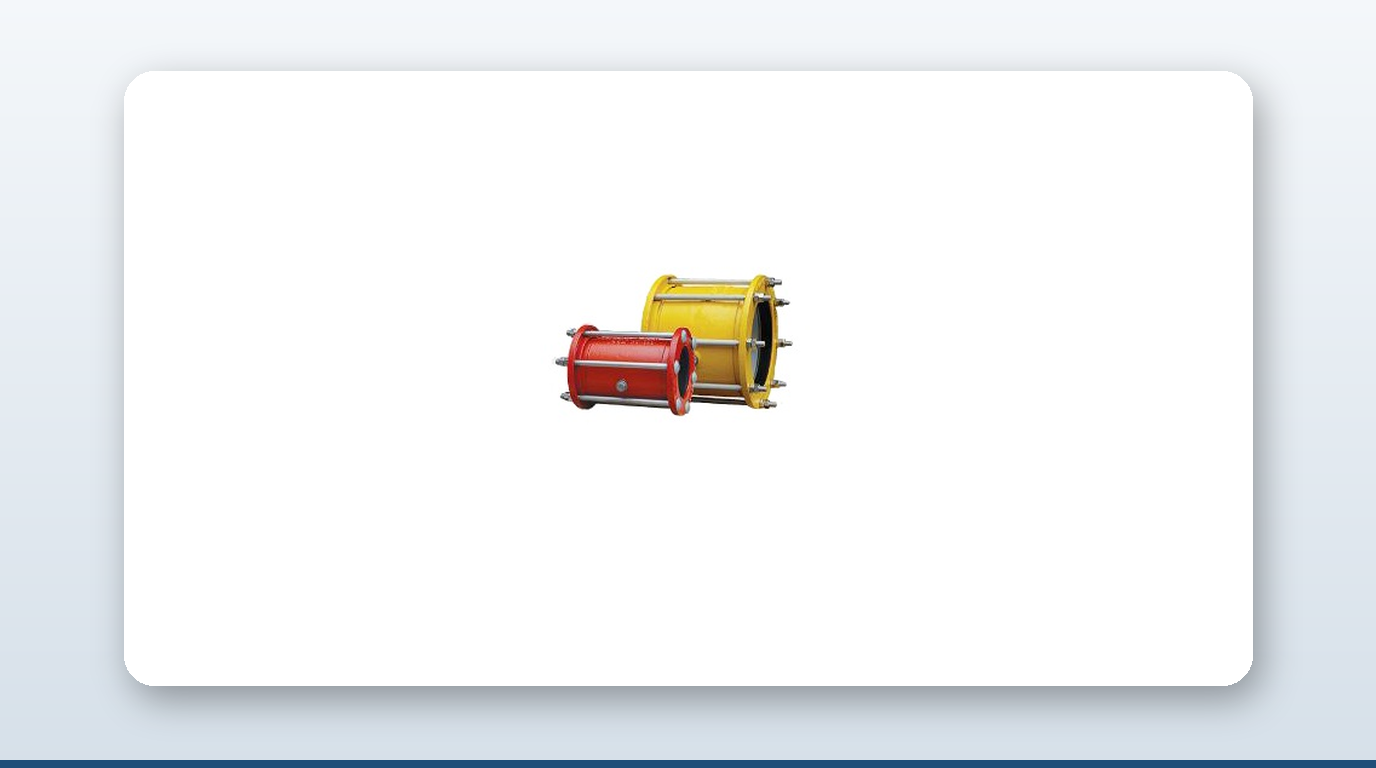
Grip-type or flexible mechanical couplings. Where a section of pipe needs to be reconnected — after a crack, a split, or a section that has to be cut out — a mechanical grip-type coupling closes the gap without hot work. JWC couplings, DPE’s primary line, cover this role across carbon steel, stainless, and most common marine pipe materials, and are the broader fix when a clamp alone will not hold.
Spare gaskets and liners in the materials already on board. A repair kit is only as useful as its consumables. EPDM liners cover general seawater and freshwater service; NBR covers fuel oil; the kit should match whatever is already installed in the vessel’s own gasket stock, not a generic assortment.
Basic hand tools sized to the clamp bolts. Torque wrenches or hand tools matched to the bolt sizes on the stocked clamps — most repair-clamp failures in the field trace back to under- or over-torqued bolts, not the clamp itself.
Sizing an Onboard Kit Across Common Diameters
The mistake most crews make is stocking one or two sizes and hoping the rest of the vessel’s piping never fails. A workable onboard kit should cover the diameter range actually running through the vessel’s engine room and deck services — typically small-bore instrument and drain lines up through the main seawater and fuel lines. Before ordering, pull the vessel’s piping diagram and note every distinct DN or NPS size in service; the kit should have at least one clamp or coupling option per size band, not just the largest line.
| Pipe Diameter Range | Typical Service | Priority for Onboard Stock |
|---|---|---|
| Small bore (up to ~DN50) | Instrument lines, drains, small auxiliary runs | Medium — failures are less catastrophic but common |
| Mid bore (DN65–DN150) | Cooling water, bilge, fuel transfer | High — most frequent leak-repair calls |
| Large bore (DN200+) | Main seawater, ballast, fire main | High — lower frequency, high consequence if unaddressed |
A sensible baseline is two to three clamp sizes covering the vessel’s most common mid-bore lines, plus one or two larger sizes for main seawater or fire main coverage, restocked every time the vessel calls at a home port. Sizing detail down to the OD level is covered in Pipe OD vs Nominal Bore: What Couplings Actually Grip.
Installation Speed Is the Real Selection Criterion
The single most important property of an onboard repair product is not ultimate pressure rating or material grade — it is how fast a two- or three-person engine-room crew can get it installed without specialist tools. No hot work is the baseline rule at sea: welding or cutting on a live system, especially near fuel or cargo lines, introduces a fire risk that most vessels and their insurers will not accept as a first response to a leak.
This is why the products worth stocking share a common trait: they close over the pipe with hand tools and bolts, not heat. A repair clamp can typically be fitted in minutes once the leak is isolated and the pipe surface is cleaned — no gas-free certificate, no hot-work permit, no waiting for a fire watch to be posted. That speed is the entire value proposition of keeping this stock on board rather than relying on a yard visit.
How Ship Chandlers and Masters Restock This Inventory
In practice, restocking an onboard emergency repair kit is rarely handled by the vessel directly — it runs through the same ship chandler relationship that supplies provisions, deck stores, and general engine-room consumables. A Master or Chief Engineer flags what was used on the last voyage, the chandler sources replacement clamps and couplings ahead of the next port call, and the kit is topped up before the vessel sails again.
This is the same channel DPE supplies into: ship chandlers like the ones DPE regularly supplies restock repair-clamp and coupling inventory for vessels calling at Singapore, and DPE’s role is to make sure that restock happens without delaying a sailing. See How DPE Handles Same-Day Orders from Ship Chandlers for how that process runs in practice.
DPE’s Same-Day Role Before a Vessel Sails
Singapore’s position as a major bunkering and transshipment port means vessels routinely have only a few hours in port before the next sailing. An emergency repair kit that needs replenishing has to be sourced, confirmed, and delivered to the ship chandler or directly to the vessel within that window — there is no margin for a multi-day lead time.
DPE operates from Kaki Bukit with same-day delivery on stocked Romacon repair clamps and JWC couplings across the common marine diameter range, which is what makes last-minute restocking before a sailing possible rather than a scheduling risk. For sizing help on a specific vessel’s piping list, see Pipe Repair Clamps Singapore: Romacon Overview.
Key Takeaways
- Onboard repair capability has to exist before the failure, because there is no same-day delivery mid-voyage — the fix has to already be in the storeroom.
- A repair kit should combine repair clamps (fit-over-the-leak) with mechanical couplings (full-joint replacement), covering both a slow leak and a section that needs to be cut out and rejoined.
- Size the kit to the vessel’s actual diameter range, not just the largest line — mid-bore cooling, bilge, and fuel lines see the most frequent leak-repair calls.
- Installation speed without hot work is the deciding factor. A clamp or grip-type coupling that closes with hand tools avoids the fire-watch and gas-free-certificate delay that welding requires.
- Restocking runs through the ship chandler relationship, topped up at every home-port call rather than sourced reactively after a failure.
Choosing between a clamp and a coupling? See our emergency pipe repair clamps buyer’s guide for the selection checklist — measured OD, pressure rating, and install speed — before you order.
About David Phee Enterprise
David Phee Enterprise is the exclusive Singapore distributor for Jeong Woo Coupling (JWC) and a long-standing supplier of Romacon stainless-steel repair clamps, operating from Kaki Bukit with same-day delivery to ship chandlers and shipyards across Singapore. For vessels sizing or restocking an onboard emergency repair kit before a sailing, DPE supports both clamp and coupling sizing across the common marine diameter range. Visit davidphee.com for stock checks and same-day quotes.