Ask a procurement team in the oil and gas sector about “the API cluster” and three numbers come up: API 5L, API 6A, API 1104. Buyers sourcing pipe couplings sometimes assume all three define coupling specifications the way ASME B16 does for onshore process piping. They don’t — and understanding why matters more than memorising the numbers.
API 5L is a pipe standard, API 6A is wellhead equipment, and API 1104 is a welding standard. None of the three is a coupling specification. But between them they draw a map of exactly where a mechanical coupling can — and cannot — sit on an oil and gas pipeline, and that map has one genuinely useful pocket for buyers: pipeline repair clamps.
API 5L: the line pipe itself
API 5L (currently the 46th edition) covers seamless and welded steel line pipe for oil, gas, and water transportation — the long-distance trunk lines, gathering systems, distribution mains, and water-injection lines that make up transmission-grade pipeline networks. It’s the substrate a coupling or repair clamp would grip, not the coupling itself.
Pipe is ordered to one of two Product Specification Levels. PSL1 is the standard grade with broader chemistry tolerances and no mandatory toughness or non-destructive examination (NDE). PSL2 is a strict superset — tighter carbon/phosphorus/sulphur limits, mandatory Charpy impact toughness testing, and 100% individual-pipe NDE. PSL2 is what shows up on high-pressure X-grade transmission mainlines.
Grades run A25, A, B, then the X-series: X42, X46, X52, X56, X60, X65, X70, X80 (and higher in the newest editions). The number after the X is the specified minimum yield strength in thousands of psi — X70 is roughly 70,300 psi SMYS. Higher X-grade means higher-strength, thinner-wall, higher-pressure steel, and a stronger signal that the line is outside coupling territory.
The number that actually matters to a coupling buyer is OD tolerance. A grip or slip-on coupling depends on gripping the pipe’s outside diameter, and API 5L allows the OD to vary by ±0.5% of specified OD for sizes up to 12¾″ (323.9 mm), and ±0.75% for anything larger. Wall thickness tolerance is ±12.5% of nominal. On a 24″ (610 mm) pipe, that ±0.75% band works out to roughly a 9 mm total OD window — wide enough that a coupling has to be selected against the measured OD on site, not the nominal spec sheet number.
API 6A: wellhead equipment — no coupling role at all
API Specification 6A (21st edition) governs wellhead and Christmas-tree equipment — casing heads, tubing heads, hangers, valves, chokes — rated to as much as 20,000 psi (1,380 bar). It’s forged, flanged, and ring-jointed upstream equipment, orders of magnitude beyond any mechanical coupling’s pressure rating. There’s no mechanical-joint content here whatsoever. If a spec calls out API 6A, the honest answer is that it’s outside a coupling supplier’s scope entirely.
API 1104: the welding standard that defines the excluded zone
API Standard 1104 (22nd edition, July 2021) governs welding procedure qualification, welder qualification, and weld-acceptance criteria for pipeline construction and in-service repair. It’s the most widely used pipeline welding standard in the world, and in several jurisdictions parts of it are mandated by federal regulation.
The key point for a coupling buyer: wherever a joint is made to API 1104, it’s a welded joint — by definition, there’s no mechanical coupling there. Every girth weld on a cross-country transmission line, every welded tie-in on a gathering system, falls under 1104’s scope and outside a coupling’s scope.
The useful corollary is that couplings and repair clamps live in 1104’s gaps — non-welded tie-ins where hot work is impractical or prohibited, temporary construction-phase or hydrotest lines that will be removed rather than welded, and emergency in-service repair, where a leaking line that can’t be shut down for welding gets a full-circle repair clamp as the immediate fix.
Where this actually lands: Singapore, Malaysia, Indonesia
Onshore process and utility piping in this region — the piping DPE’s coupling range actually serves — is built to ASME B31.3 with ASME B16 flanges and fittings, not the API 5L/6A/1104 cluster. That cluster belongs to transmission pipelines and upstream wellheads: PETRONAS pipeline work in Malaysia, Pertamina and PGN gas trunklines in Indonesia, and similar networks region-wide, all specifying API 5L pipe, ASME B31.4/B31.8 design, and API 1104 welding.
Singapore itself has no domestic cross-country transmission network — it’s an import, refining, and petrochemical hub rather than a producing geography — so API 5L mainly surfaces on Jurong Island inter-plant and jetty feedstock lines, referenced by EPC contractors, with API 6A essentially absent since there are no domestic upstream wellheads.
The one real coupling play: repair clamps on in-service lines
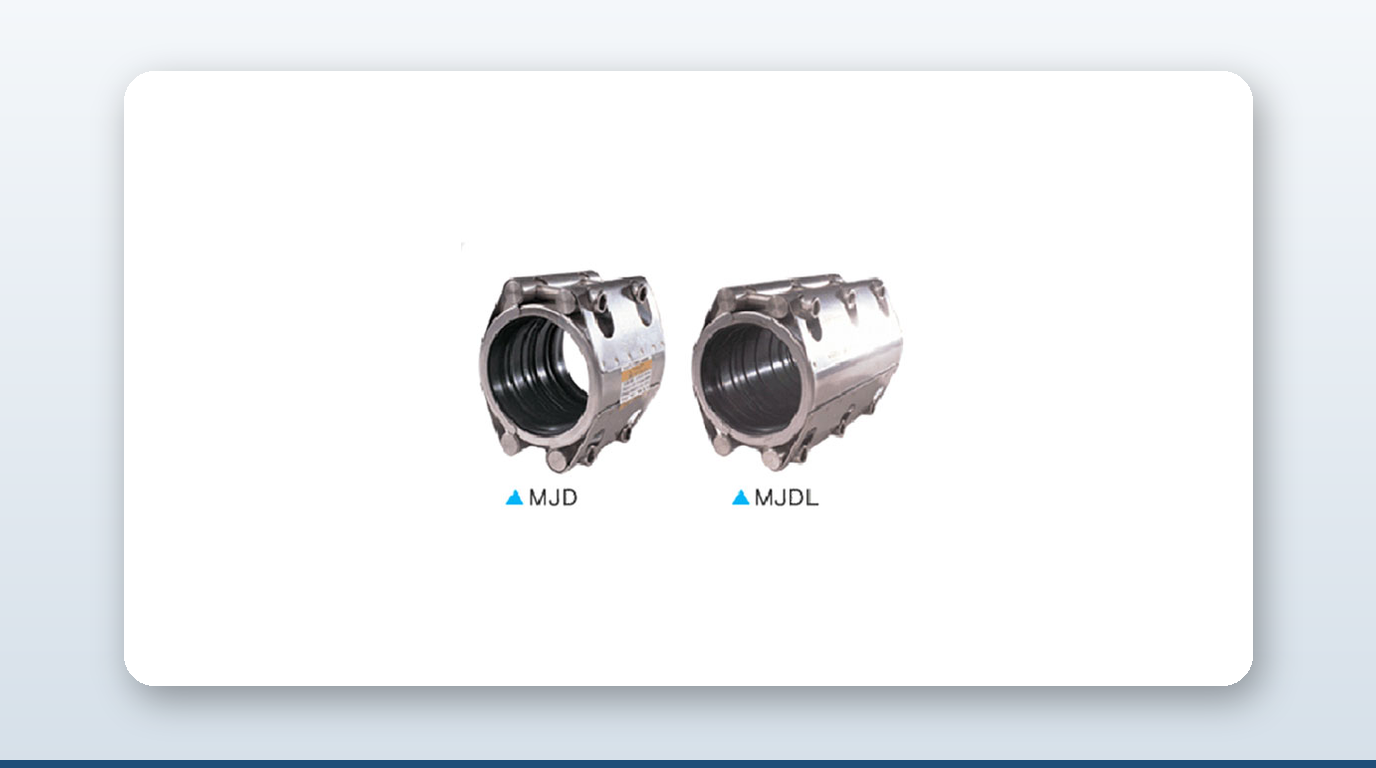
The recurring exception across all three standards is the pipeline repair clamp. A full-circle clamp seals an active leak — a corrosion pit, split, or pinhole — on an in-service API 5L line without taking it down, and it’s a genuine MRO consumable rather than a one-off project item, re-ordered every time it’s used. This is the segment where a supplier with the right stock, not just the right catalogue, wins the call. Confirming the grip range brackets the pipe’s actual measured OD — not the nominal figure — is the step that determines whether the clamp seals or leaks.
For low-pressure, non-critical utility or water service running on PSL1/Grade B API 5L pipe, a standard grip coupling can also apply, provided the same OD-matching discipline is followed — but the high-pressure PSL2 X-grade transmission world remains structurally out of reach for any mechanical joint.
For process piping built to ASME B16 flange standards rather than transmission-grade API 5L, the coupling and material questions are more straightforward — see our guides on stainless vs carbon steel coupling housings and how pipe coupling standards like ISO, JIS and BS fit alongside the American standards discussed here.
Key Takeaways
- API 5L is a line-pipe specification, not a coupling standard — the number that matters to a coupling buyer is OD tolerance (±0.5% up to 12¾″, ±0.75% above), not the steel grade.
- API 6A wellhead/Christmas-tree equipment (up to 20,000 psi) has no mechanical-coupling role at all — it’s forged, flanged, and welded upstream equipment.
- API 1104 governs welded pipeline construction; wherever it applies, the joint is welded and a mechanical coupling is excluded by definition.
- The recurring, genuine coupling opportunity in this standards cluster is the pipeline repair clamp — sealing an active leak on an in-service line without a shutdown, sized against the pipe’s measured OD.
- Onshore process piping in Singapore, Malaysia, and Indonesia is overwhelmingly built to ASME B31.3 + B16, not the API 5L/6A/1104 transmission cluster — that’s where a general coupling supplier’s catalogue actually competes.
About David Phee Enterprise
David Phee Enterprise (DPE) is a Singapore-based industrial pipe coupling and repair clamp supplier at Empire Technocentre, Kaki Bukit, and the exclusive Singapore distributor for JWC (Jeong Woo Coupling). While high-pressure API transmission pipelines sit outside DPE’s core coupling range, our repair clamp and low-pressure utility coupling stock is built for exactly the emergency, non-welded, and temporary-line scenarios described above. For a same-day quote against a measured pipe OD, visit www.davidphee.com or contact our team directly.